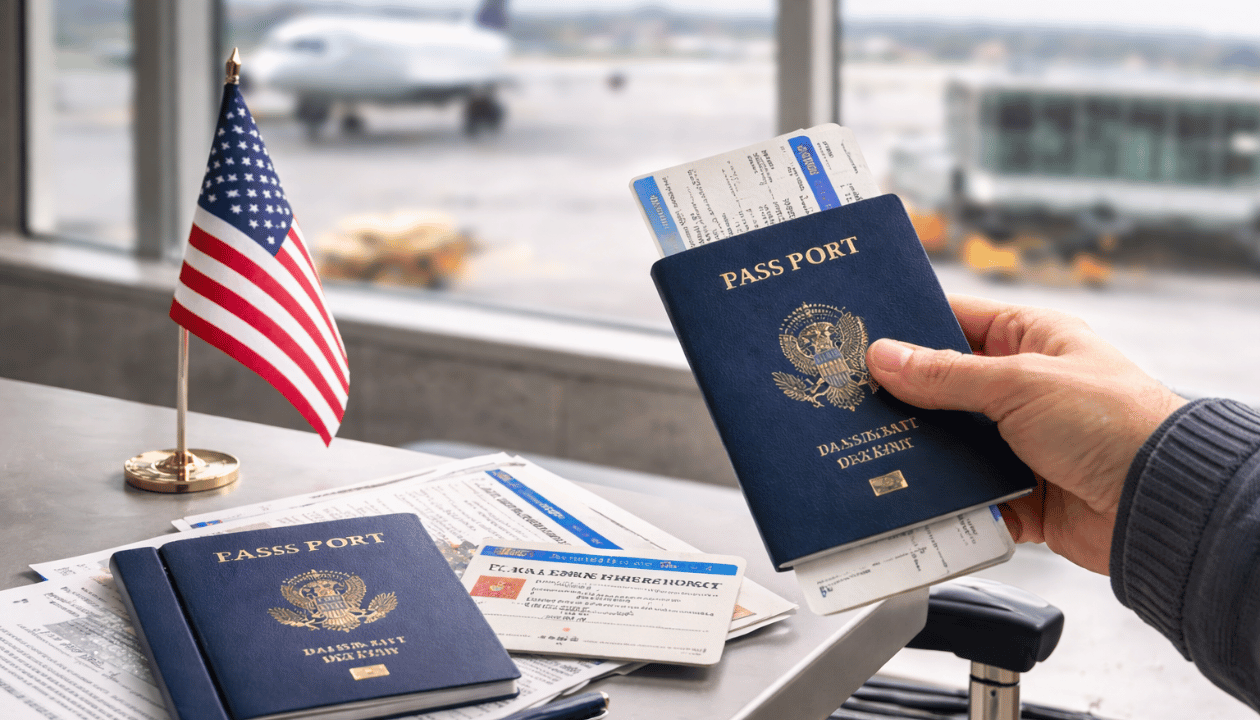





A woman came to my office last fall with a manila folder in her lap and her hand shaking as she opened it. Inside were three years of text messages, two hospital records, a copy of her marriage certificate, and a single photograph she did not want to look at. Her husband, a U.S citizen, had spent the last four years telling her that if she ever left him, he would make sure she was deported. She had believed him. Most of the women who walk into my office for VAWA cases have believed some version of that same lie.
Listen, I have to tell you what I told her, because the lie is the same lie that keeps thousands of abused spouses and abused children locked inside dangerous homes every year. You do not need your abuser to file for your green card. Congress wrote a law specifically so that you do not. It is called the Violence Against Women Act, and the VAWA self-petition process exists for one reason: so that a U.S citizen or lawful permanent resident cannot use someone’s immigration status as a weapon.
I am Ayesha Chidolue, Founder and Managing Attorney at The Chidolue Law Firm, and in more than 19 years of immigration law, I have walked dozens of survivors through this exact process, from initial filing through approved VAWA self-petition and on to lawful permanent residence. What follows is the version I would give you across my desk, with no legal fog and no judgment, so you understand what your options actually look like.
What Is the VAWA Self-Petition?
Congress passed the Violence Against Women Act in 1994 to fix something that had been quietly destroying lives for decades. Before VAWA, an abusive U.S citizen or lawful permanent resident spouse, parent, or adult child held all the immigration cards. If they refused to file a visa petition for their relative, the relative had no path to legal status. Abusers figured this out fast and used it to control their victims.
The Violence Against Women Act (VAWA), written into the Immigration and Nationality Act, created a route for victims of domestic violence to apply for lawful permanent resident status on their own. The VAWA self-petition lets an abused spouse, abused child, or abused parent ask for immigration benefits independently and pursue lawful immigration status without the abuser ever knowing the application exists. The Immigration and Nationality Act protects men, women, and children equally under VAWA, despite what the name of the women act suggests.
In practical terms, the VAWA self petitioner files Form I-360, the Petition for Amerasian, Widow(er), or Special Immigrant, with United States Citizenship and Immigration Services. If approved, the self petitioner can later file Form I-485 to register permanent residence or adjust status to lawful permanent resident. In some cases, eligible applicants can file I-360 and I-485 concurrently, which saves months.
Real talk: VAWA is not just for women. I have represented sons abused by U.S citizen parents, parents abused by their adult citizen son or daughter, and men abused by their wives. The law does not care about gender. It cares whether you suffered battery or extreme cruelty at the hands of someone who controls your path to status.
Who Is Eligible to File a VAWA Self-Petition?
Eligibility requirements under VAWA are specific, and the qualifying relationship matters as much as the abuse itself. The abuser must be a U.S citizen or a lawful permanent resident. If that core relationship is missing, VAWA is not the right vehicle, and we need to look at U visas, T visas, or other forms of relief instead.
The following individuals can self petition:
- Spouses, including a former spouse. An abused spouse or former spouse of a U.S citizen or lawful permanent resident spouse may self petition if they suffered battery or extreme cruelty during the marriage. An intended spouse may also qualify in certain circumstances, for instance where the abuser committed bigamy that the victim did not know about.
- Children. An abused child of a U.S citizen or lawful permanent resident parent can self petition. Children remain eligible regardless of marital status, and parents can sometimes include children on their own filing.
- Parents. An abused parent of an abusive U.S citizen son or daughter, 21 or older, may also qualify. Parents of an abusive citizen son or daughter are often overlooked under VAWA, but the citizen son or daughter category is fully protected.
Beyond the qualifying relationship, every VAWA self petitioner must show the following:
- Battery or extreme cruelty. You must show that the abuser inflicted battery or extreme cruelty against you. Battery includes any offensive touching without consent. Extreme cruelty is broader and includes psychological and emotional abuse, threats, controlling behavior, sexual abuse, and patterns of intimidation. USCIS evaluates extreme cruelty based on the totality of the circumstances, not a single incident.
- Joint residence. You must have resided with the abuser at some point. The abuse itself must have happened in the United States, or have a U.S nexus that USCIS recognizes.
- Good faith marriage, if filing as a spouse. You must prove the legal marriage was entered into in good faith, not for immigration status. A good faith marriage means you intended to build a real life together, regardless of how it ended. If divorced, the divorce must be linked to the abuse and the self petition must be filed within two years of the divorce.
- Good moral character. You must demonstrate good moral character, typically through police clearance letters from every place you have lived in the last three years. A limited criminal record may be excused if you can show the offense was tied directly to the abuse.
- Eligible for an immigrant visa. You must qualify as an immediate relative or otherwise have a visa available. Immediate relative classification matters here, because immediate relatives of U.S citizens have a current priority date the moment the petition is approved, which speeds up adjustment of status significantly.
Real talk: A police report is not required. Let me say that again, because survivors come into my office convinced they have no case because they never called the police. USCIS does not require a police report for VAWA self petitions. The agency reviews the petition under what is called the any credible evidence standard, which is a much broader and more humane standard than what you might expect from immigration law.
What Evidence Do You Need to File a VAWA Self-Petition?
This is where most VAWA cases are won or lost. USCIS evaluates all submitted materials under the any credible evidence standard, which means the agency will look at whatever you can reasonably gather. There is no fixed list. But here is what we typically build a self petition packet around in my practice.
Proof of the qualifying relationship
A marriage certificate, birth certificate, or adoption records, depending on whether you are filing as a spouse, child, or parent. If you are filing as the spouse of a deceased abuser, we add the death certificate.
Proof of the abuser’s status
A copy of the abuser’s U.S passport, naturalization certificate, or green card. If you do not have direct access, we can sometimes prove status through court records, tax records, or USCIS verification. You should never confront the abuser to gather this. USCIS is legally prohibited from contacting the abuser during the VAWA application process, but you still need the evidence indirectly.
Evidence of battery or extreme cruelty
This is the heart of the case. Documentary evidence and supporting documents that we commonly use include:
- Police reports, restraining orders, and court records.
- Medical records and hospital records showing injuries or mental health treatment tied to the abuse.
- Photographs of injuries, damaged property, or threatening messages.
- Witness statements from family, friends, neighbors, clergy, school officials, or coworkers who observed the abuse or its aftermath.
- Letters from counselors, social workers, or domestic violence shelters.
- A detailed personal declaration written by you, walking through the relationship and the abuse in your own words.
The personal declaration is the single most important piece of supporting evidence in almost every VAWA case I file. It is your story, signed under penalty of perjury, and it is what gives every other piece of credible evidence context. Personal declarations are crucial for demonstrating both the abuse and the relationship itself.
Proof of joint residence
Lease agreements, utility bills, insurance documents, and mail addressed to both of you at the same address. Anything that shows you lived together.
Proof of good faith marriage, for spousal cases
Joint bank statements, joint tax returns, photographs from the relationship, communications, evidence of shared children, statements from people who knew you as a couple. The fact that the marriage ended or became abusive does not undermine the good-faith marriage element, as long as it was real when you entered it.
Proof of good moral character
Police clearance letters from every jurisdiction you have lived in for the last three years, plus a sworn statement from you. If you have a criminal record, we address it head-on and explain any connection to the abuse.
Real talk: USCIS requires proof of five primary elements to approve a VAWA self-petition: qualifying relationship, joint residence, battery or extreme cruelty, good moral character, and, for spousal cases, good faith marriage. Build your packet around those five, not around what feels emotionally most painful. Both matter, but the legal elements are what the officer is checking off.
The VAWA Self-Petition Process, Step by Step
Here is the road map of the VAWA self-petition process as I walk clients through it.
Step 1. Confidential consultation with an immigration lawyer
Before anything is filed, we sit down and screen the case. An immigration lawyer with VAWA experience will look at the qualifying relationship, the abuser’s immigration status, the timing of any divorce, the evidence available, and any criminal record or other admissibility issues. This first conversation costs you a few hours and can save you years.
Step 2. Build the evidence packet
We collect documentary evidence, draft the personal declaration, gather supporting documents from professionals and witnesses, and organize everything around the five required elements. This stage usually takes several weeks because survivors are often gathering proof while still navigating safety planning.
Step 3. File Form I-360
File Form I-360 to initiate the VAWA self-petition. There is no filing fee for VAWA self-petitions, which is one of the most important protections built into the law. USCIS processes VAWA petitions at the Vermont Service Center, which has officers specifically trained in VAWA cases. You will include evidence of abuse with your Form I-360, along with proof of the relationship, residence, good faith marriage where applicable, and good moral character.
Step 4. Receipt notice and prima facie determination
Within a few weeks of filing, you should receive a receipt notice confirming the case is in the system. Soon after, USCIS conducts an initial prima facie review of the petition and, in most cases, issues a prima facie determination notice. A prima facie determination is not full approval, but it is a finding that on its face the petition appears valid. That prima facie determination notice is meaningful because self-petitioners can receive certain public benefits and assistance after prima facie approval, even before the full I-360 is decided.
Step 5. Full review and approval
The full I-360 review at the Vermont Service Center can take many months. Processing times shift. If approved, you become an approved VAWA self-petitioner, which protects you from removal proceedings in most situations and makes you eligible to apply for employment authorization. If approved, VAWA status is in place and a visa is available, you move to adjustment of status.
Step 6. Adjust status to lawful permanent resident
VAWA self-petitioners file Form I-485, Application to Register Permanent Residence or Adjust Status, to become a lawful permanent resident. If you are an immediate relative of a U.S citizen abuser, your priority date is current immediately. If your abuser is a lawful permanent resident, you wait for a priority date in the family preference category, though VAWA gives certain timing protections that other applicants do not have. Adjustment of status can take 8 to 24 months after I-360 approval. USCIS conducts an interview at the local USCIS field office for most VAWA adjustment of status cases, though some are waived. This interview is the final big step in the immigration process for most VAWA self petitioners.
Concurrent filing of I-360 and I-485 is allowed when you are an immediate relative and otherwise eligible to adjust status. We use concurrent filing whenever it is available, because it cuts the overall timeline significantly.
Bars to Adjustment and Grounds of Inadmissibility for VAWA Applicants
VAWA self-petitioners are exempt from certain immigration bars that block almost everyone else. Unauthorized employment, overstaying a visa, and, in some circumstances, entry without inspection do not prevent a VAWA self-petitioner from moving forward. This is a deliberate carve-out, written into the law because Congress recognized that abuse often forces victims into immigration violations they would not have committed otherwise.
But VAWA is not a free pass on every issue. You still must show admissibility. Grounds of inadmissibility that can still cause problems include:
- Certain criminal convictions, especially those involving moral turpitude or controlled substances.
- Fraud or misrepresentation in past immigration filings.
- Health-related grounds.
- National security and public safety grounds.
Some grounds of inadmissibility can be waived, and VAWA self-petitioners often qualify for specific waivers tied to extreme hardship or to the abuse itself. Each case turns on a careful review of immigration history and criminal record with an immigration lawyer before the case is filed.
Is the VAWA Self-Petition Process Confidential?
Yes. Confidentiality is built into VAWA in ways that few other immigration benefits enjoy. Immigration services cannot disclose information about your application to third parties except in extremely narrow circumstances. USCIS is also barred from denying a petition based on information provided solely by the abuser or by other prohibited sources. If you have filed under VAWA, USCIS will not accept a change of address request under your name unless it comes directly from you.
In practice, this means your abusive spouse, abusive family member, or abusive U.S citizen son will not get a notice from USCIS that you are seeking immigration benefits. They will not be interviewed. They will not be informed of your filing or your eventual approval. The confidentiality rules are some of the strongest safety provisions in immigration law.
Real talk: If safety is the reason you have not filed yet, I want you to hear this clearly. The system was designed so that your abuser does not find out. We can use a mailing address that is not your home, we can route every communication through our firm, and you control what your abuser learns. You do not have to choose between safety and legal status.
What an Approved VAWA Self-Petition Actually Gets You
People sometimes assume VAWA is just one piece of paper. It is more than that. Once you have an approved VAWA self-petition, you unlock several immediate protections and benefits:
- Protection from deportation. Approved VAWA self-petitioners are generally protected from removal proceedings while their case moves forward, and approved status grants ongoing protection.
- Employment authorization. VAWA self-petitioners can apply for work authorization, which means you can support yourself and your children without depending on an abuser.
- Public benefits eligibility. After a prima facie determination, self petitioners can access certain public assistance programs that are otherwise closed to noncitizens.
- Path to lawful permanent residence. An approved I-360 is the foundation for adjustment of status to permanent resident, and eventually to citizenship if you choose to naturalize.
- Derivative protection for children. Your unmarried children under 21 can often derive lawful permanent residence through your case, even if they were not directly abused.
Common Mistakes That Sink VAWA Self-Petitions
In my practice, I see the same mistakes over and over, and almost all of them are preventable.
- Filing too soon after the divorce. If you are divorced, the divorce must be linked to the abuse, and the petition must be filed within two years. Wait too long, and the window closes.
- A weak personal declaration. A two-paragraph statement does not do the work. The personal declaration is the spine of the case and needs detail, chronology, and emotional truth.
- Ignoring good moral character. Old arrests, dismissed cases, and even minor offenses need to be addressed and explained. Hiding them is worse than disclosing them.
- Misunderstanding the qualifying relationship. If your abuser is not a U.S citizen or lawful permanent resident, VAWA does not apply. A U visa or T visa might. Get this screened early.
- Filing without an immigration lawyer. VAWA touches confidentiality, evidence, criminal records, waivers, and adjustment timing all at once. The cases that get denied are almost always the ones where critical details were missed at intake.
FAQs
How long does the VAWA self-petition process take from start to finish?
Processing times vary, but most cases run on the longer side. The Vermont Service Center I-360 review alone can take more than a year. After that, adjustment of status to lawful permanent resident can take another 8 to 24 months. If you file I-360 and I-485 concurrently as an immediate relative of a U.S citizen, you may shave significant time off the overall process.
Do I have to leave my abuser before I file?
Not necessarily. The law does not require physical separation at the time of filing, though many self petitioners do leave for safety reasons. What matters legally is that you resided with the abuser at some point and that the abuse occurred. Many survivors file while still living with the abuser, using a safe mailing address through their immigration lawyer.
Can men file a VAWA self petition?
Yes. Despite the name of the women act, the protections are gender neutral. I have represented men abused by US citizen wives and adult sons abused by US citizen parents. The same eligibility requirements apply.
What if my abusive spouse died before I could file?
You may still qualify as a self petitioner if you file within two years of the death, the marriage was a good faith marriage, and the other VAWA elements are met. The qualifying relationship survives, in legal terms, for a limited window after death.
Can I include my children in my VAWA self petition?
Yes. Unmarried children under 21 can typically derive lawful permanent residence through your case. This is true even if the children were not directly abused, and it is one of the most important protections in the law for mixed status families.
What happens if my I-360 is denied?
Denial is not necessarily the end. Depending on the reason, you may be able to file a motion to reopen, appeal, or refile with stronger evidence. This is one of the moments where having an immigration lawyer matters most, because the wrong next step can foreclose options that were still on the table.
Is there a filing fee for the VAWA self petition?
No. There is no filing fee for the I-360 VAWA self petition itself. Other forms in the process, including adjustment of status, may have fees, and fee waivers are often available for VAWA applicants. Money should not be the reason a survivor stays.
Talk to a VAWA Attorney Who Has Done This Before
The VAWA self petition process is one of the most powerful tools in U.S immigration law, and also one of the most misunderstood. If you are an abused spouse, abused child, or abused parent of a U.S citizen or lawful permanent resident, you may have a path to lawful permanent residence that does not require your abuser’s signature, knowledge, or consent.
At The Chidolue Law Firm, we have walked many survivors through this process, from the first confidential consultation through approved VAWA self-petition and on to lawful permanent resident status. We will screen your case carefully, plan around your safety, and tell you the truth about what your case looks like, even when the truth is complicated.
📞 Call The Chidolue Law Firm today at:
➡ 678-233-2170
➡ 678-325-1037
💬 For WhatsApp inquiries, contact us at:
➡ 404-333-8751
You do not have to figure this out alone. The door is open, and the conversation is confidential from the very first call.