




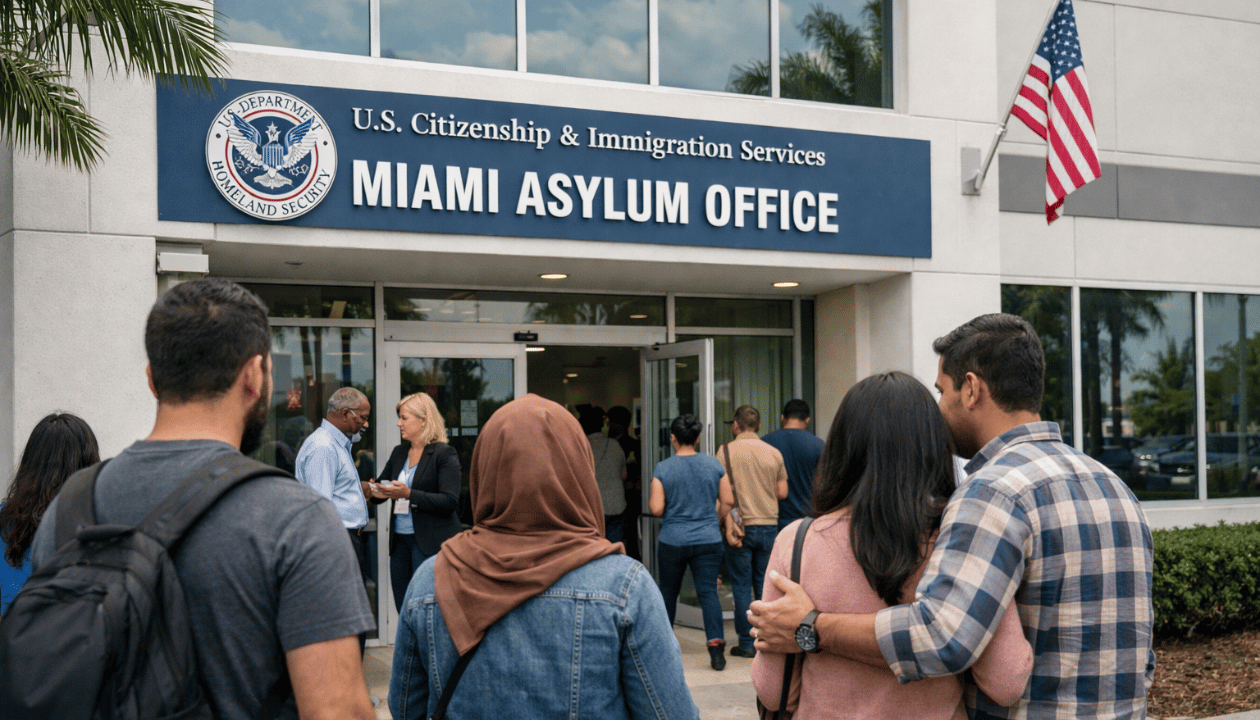
The Miami Asylum Office is responsible for reviewing affirmative asylum applications filed by individuals living in South Florida. This office conducts asylum interviews and decides whether applicants qualify for protection under U.S. law.
Asylum in the United States is governed by the Refugee Act of 1980 and the Immigration and Nationality Act. It offers protection to people who fear persecution based on race, religion, nationality, political opinion, or membership in a particular social group.
Demand for asylum protection continues to grow. According to official USCIS data, more than 2.4 million affirmative asylum cases were pending nationwide as of December 31, 2024, contributing to longer processing times and delays.
This guide explains how the Miami Asylum Office works, what to expect during the process, and how legal guidance can help protect your case.
About the Miami Asylum Office
The Miami Asylum Office also called USCIS Miami Asylum, office code “ZMI”, processes asylum claims and conducts interviews for applicants in the region. It is located at:
- Address: 1501 Biscayne Blvd, Suite 300, Miami, FL 33132.
- Phone: (786) 456-2900 (main public number).
- Email: Miami.Asylum@uscis.dhs.gov.
- Fax: (786) 456-2900.
- Walk-in Hours: Wednesdays 9:00–10:30 AM (note: these hours may not always be available).
- Attorney Access: Lawyers can attend interviews remotely by video.
This office has experienced asylum officers who review applications, interview asylum seekers, and decide whether to grant asylum based on U.S. law. Miami processes a diverse caseload. Many applicants come from Central America, the Caribbean, and other regions, so officers must understand different cultures and situations. The office also works with local groups to help educate asylum seekers about their rights and the process. In short, the Miami Asylum Office is a key step for refugees seeking safety in the U.S.
Asylum Law and Eligibility
To qualify for asylum in the United States, an applicant must show a well-founded fear of persecution in their home country because of race, religion, nationality, political opinion, or membership in a particular social group. The harm they fear must be serious enough to be considered persecution, and they must show they cannot return home safely.
Under U.S. law, most asylum applications must be filed within one year of the applicant’s last arrival in the country. There are some exceptions, for example, if country conditions changed after arrival but late applications are reviewed very closely.
Not everyone is eligible for asylum. People who have committed serious crimes, participated in persecution, or engaged in terrorist activities are barred from asylum. Simply coming from a dangerous country is not enough; the fear must be tied to a protected ground and the applicant must meet legal requirements.
In FY 2023, about 54,350 individuals were granted asylum in the U.S. (excluding family members), which shows how competitive and important it is to meet eligibility standards.
The Asylum Application Process
The asylum process starts by filing the official application. To apply, an asylum seeker must complete USCIS Form I-589 (Application for Asylum and for Withholding of Removal) and submit it to USCIS. Form I-589 asks about personal history, persecution experiences, and reasons for seeking asylum. This form is submitted without any fee and usually must be filed within one year of arriving in the U.S.
After filing Form I-589, USCIS will schedule a biometric appointment (fingerprints and photo) for background checks. Soon after, USCIS will send a notice for an asylum interview. The interview will take place at the Miami Asylum Office (address above).
Key steps of the application:
- Submit Form I-589: Complete and file the asylum application with USCIS. The form must be filed within one year of entry into the U.S. Include detailed answers about your fears and evidence.
- Include Evidence: Gather supporting documents to back up your claim. This may include police reports, medical or psychiatric records, witness statements, or news articles that document the persecution you faced. Organize these documents and make copies to bring to your interview.
- USCIS Processing: Attend your biometrics appointment, USCIS will notify you of the date. After that, USCIS will send an interview date at the Miami Asylum Office. Keep USCIS informed if you change address.
- Asylum Interview: Prepare for the interview (see next section). On the interview day, report to the Miami office (1501 Biscayne Blvd) with all your documents and identification.
Preparing for the Asylum Interview
Before the interview, review Form I-589 carefully and be ready to discuss every part of it. Make sure all information is accurate. Gather the strongest evidence you have and organize it in advance. An organized case file with key documents and a clear timeline of events will help the officer understand your story. It can also be helpful to practice answering questions about your case with someone you trust or a legal adviser.
Being consistent and credible during your interview is very important. In recent years, data shows that only about 14% of all U.S. asylum cases resulted in a grant in FY 2023, which means strong preparation can make a real difference in your chances of success.
Key preparation tips:
- Know your application: Go over every answer on Form I-589. Be prepared to explain your experiences and the reasons for your fear of returning. Consistency is important.
- Evidence folder: Collect documents like affidavits, police or medical records, court papers, or news clippings that support your claims. Bring copies of each document to the interview.
- Timeline of events: Write a clear chronology of the events that caused your fear. A timeline can help you remember details under stress and explain things clearly to the officer.
- Interview practice: Consider doing a mock interview with a friend, family member, or attorney. Practice speaking calmly and truthfully about your case.
Tips for a Successful Interview
At the asylum interview, your goal is to communicate your story honestly and clearly. Remember the following tips to make a good impression:
- Be honest: Always tell the truth about your experiences. Don’t lie or exaggerate. USCIS officers check for consistency and credibility, so truthful answers are crucial.
- Speak clearly: Answer the questions directly. Avoid rambling. If a question is confusing, it’s better to ask the officer to clarify than to guess the answer.
- Stay calm: It’s normal to feel nervous, but try to stay composed. Take your time to think before answering. Deep breaths and a respectful demeanor can help maintain focus.
- Dress respectfully: Wear neat, modest clothing. Professional attire shows respect for the process and the interviewer.
- Bring an interpreter if needed: If you are not fluent in English, you must bring a qualified interpreter who speaks both English and your language. USCIS generally does not provide interpreters except in rare cases. Make sure the interpreter understands your language and is neutral (not a relative if possible).
- Arrive early: Plan to get to the office with time to spare. Bring identification (passport or other ID) and copies of any documents mentioned above.
By preparing carefully and following these tips, you give yourself the best chance of a clear, effective interview.
After the Interview
After the asylum interview at the Miami office, the asylum officer will carefully review your testimony, documents, and background checks before making a decision. This review can take time, especially when cases are complex or backlogs are high.
If your asylum application is approved, you will receive a written grant of asylum and may apply for a green card after one year of continuous presence in the United States. If your application is denied, USCIS will usually issue a written decision and may refer your case to immigration court, where you can apply for asylum again defensively before a judge.
Delays after interviews are common. According to official USCIS data, asylum applicants often wait several months or longer for a final decision due to heavy caseloads and security reviews.
Challenges Faced by Miami Asylum Seekers
People applying for asylum often face serious challenges. One of the biggest obstacles is long wait times caused by nationwide backlogs. According to data from the Transactional Records Access Clearinghouse at Syracuse University, the average wait time for an asylum case in immigration court now exceeds four years, and many cases take even longer to resolve.
In Miami, these delays mean applicants must be prepared for long periods of uncertainty before receiving a decision. This waiting can be emotionally exhausting and stressful for individuals and families.
Many asylum seekers have experienced trauma in their home countries. It is common to struggle with anxiety, depression, or post-traumatic stress while waiting for asylum. Seeking counseling, community support, or mental health services can help manage these challenges.
Financial hardship is another major issue. By law, most asylum seekers cannot work until their application has been pending for at least 150 days and meets other requirements. This restriction can make it difficult to support oneself during long delays. At the same time, access to legal help is limited, and many applicants must navigate complex immigration rules without an attorney.
Trusted Support and Legal Help for Asylum Seekers in Miami
Miami offers important resources for asylum seekers, including legal, social, and community-based support. Several organizations provide free or low-cost legal assistance to help applicants understand asylum law, prepare documents, and navigate interviews. Access to reliable legal guidance can make a meaningful difference in avoiding mistakes and delays during the process.
Beyond legal help, many non-profit groups and community centers offer counseling and social services. These services include mental health support for trauma, language classes, workshops, and help with basic needs such as food, healthcare access, and housing referrals. Emotional and practical support is especially important during long waiting periods.
At The Chidolue Law Firm, we work closely with asylum seekers to provide clear legal guidance, case preparation, and representation throughout the asylum process. Our goal is to protect your rights, strengthen your application, and help you move forward with confidence during a challenging time.
Move Forward with Confidence in Your Asylum Case
The asylum process can feel confusing and stressful, but you do not have to face it alone. Clear legal guidance can help reduce delays, avoid mistakes, and protect your rights at every stage.
📞 Call The Chidolue Law Firm today at:
➡ 407-995-6567
➡ 678-325-1037
💬 For WhatsApp inquiries, contact us at:
➡ 404-333-8751
If you are preparing for an interview, waiting for a decision, or responding after a denial, our team is ready to assist you. Let us help you move ahead with clarity and confidence. Your path to protection in the U.S. starts here.