





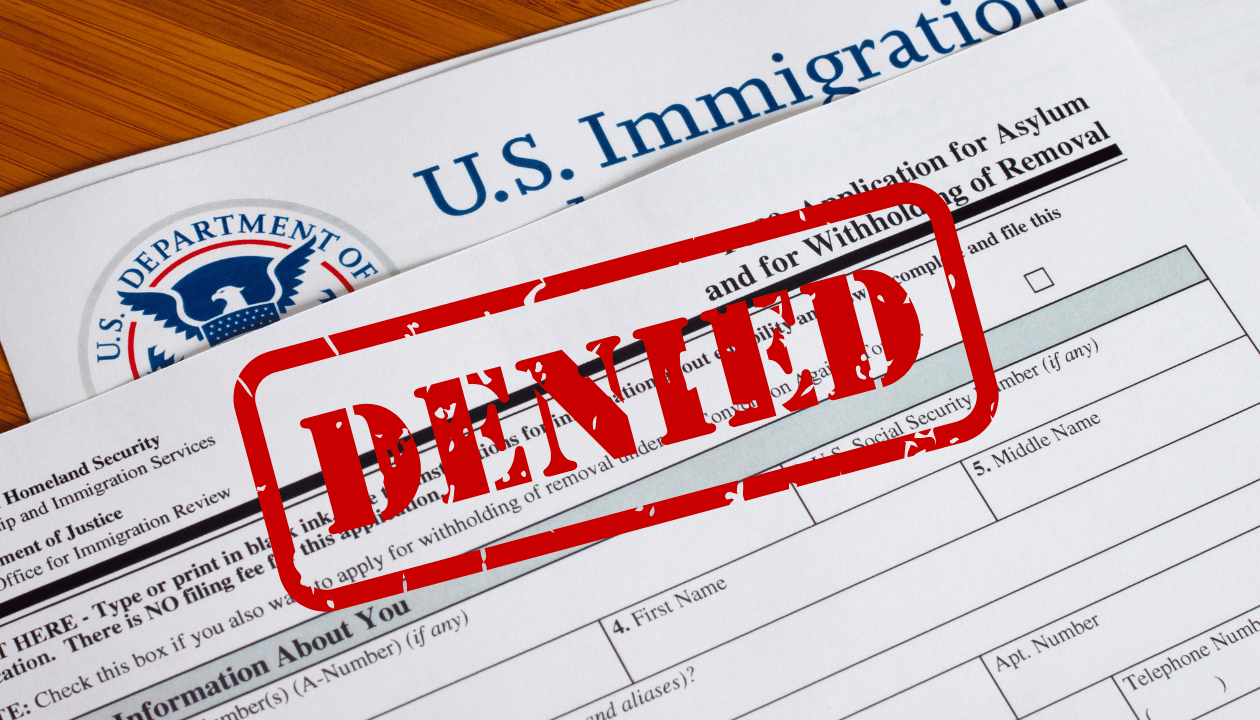
A man walked into my office last spring with a denial notice folded into quarters in his shirt pocket. He had been waiting fourteen months for an answer on his wife’s case. The letter ran two pages. He had read it twenty times and still could not tell me what went wrong. His English was good. The letter was not the problem. The problem was that USCIS had buried the actual reason for the denial under five paragraphs of generic language, and the one sentence that mattered was sitting on page two.
Listen, if your I-130 petition is denied, the first thing I need you to understand is that the denial notice is not the end of the story. It is the start of a different story. I am Ayesha Chidolue, Founder and Managing Attorney at The Chidolue Law Firm, and in 19 plus years of practicing immigration law, I have rebuilt more I-130 cases after denial than I can count. Most denials are fixable. Some are not. Knowing the difference is what this article is about.
So let me walk you through what I tell clients across my desk. What an I-130 is, why USCIS denies these petitions in the patterns we see in 2026, what your options actually are once you have a negative decision in hand, and how to choose the best path forward without burning the next chance.
What Form I-130 Actually Does?
Form I-130 is the Petition for Alien Relative. It is not a visa application, it is not a green card application, and it does not give your relative legal status by itself. What it does is establish, in the eyes of immigration services, that a qualifying family relationship exists between you, the petitioner, and your beneficiary. Everything else in the family-based immigration process flows downstream from this one approval.
A U.S citizen can file an I-130 for a spouse, a parent, an unmarried or married child, or a sibling. A lawful permanent resident can file for a spouse or an unmarried child. Beyond that list, the I-130 door is closed. Cousins, grandparents, in-laws, fiances who are not yet spouses, none of these qualify. And before you file anything, the petitioner has to be able to prove their own status as either a U.S citizen or a lawful permanent resident. Expired green cards, status that has lapsed, or an unresolved removal issue will sink the case before USCIS ever gets to the relationship itself.
USCIS adjudicates roughly 800,000 I-130 petitions per year. That number matters because at that volume, officers are looking for reasons to deny quickly. A clean, well-documented petition stands out. A sloppy one gets flagged.
Why I-130 Petitions Get Denied in 2026?
These are the most common reasons a 130 petition is denied in 2026, based on the patterns I am seeing in our own files and in the cases other firms are sending us for second opinions. When a 130 is denied, the underlying issue almost always falls into one of the categories below. None of these are obscure. All of them are preventable when you spot them early.
1. Insufficient evidence of a bona fide marriage
This is the single most common reason a 130 petition is denied in spousal cases. USCIS denies I-130 petitions for lack of a bona fide marriage when the file contains marriage certificates and not much else. The agency evaluates the marriage under a totality of the circumstances standard, which means USCIS determines the legitimacy of a marital relationship by looking at the whole picture, not just a wedding date. They want to see the shape of a real life shared between two people. Joint financial documents are crucial: joint tax returns, joint bank statements, shared insurance policies, utility bills in both names, a joint lease or mortgage. Affidavits from friends and family who knew you as a couple add weight by speaking to a genuine marriage from outside the household. A folder with only the marriage license inside is what triggers a Request for Evidence or, worse, a quiet denial.
2. Failure to respond to a Request for Evidence
If USCIS sends an RFE asking for additional evidence and the petitioner does not respond by the deadline, the case is denied automatically. I have seen people miss RFEs because the notice went to an old address, because a family member set the envelope aside without opening it, or because the petitioner thought they had more time than they did. Failing to respond to a Request for Evidence triggers an automatic denial, and the only fix at that point is to start over or file a motion.
3. Failure to prove prior marriages were legally terminated
If either spouse had prior marriages, USCIS wants certified copies of divorce decrees or death certificates for every one of them. Failure to provide proof of termination of prior marriages can result in denial of an I-130 petition, even when the current marriage is genuine and well-documented. This trips up clients who assume that because they remarried, the law treats the earlier marriage as resolved. It does not. The paperwork has to be in the file.
4. Suspected marriage fraud and inconsistent interview answers
USCIS may deny a 130 petition if it suspects marriage fraud or sees red flags during the interview. Inconsistent interview answers between spouses, dramatic gaps in shared history, or details that contradict the written record can damage a petition’s credibility and lead to denial. Spousal petitions where one partner is significantly older, where the couple has spent very little time together, or where prior immigration filings exist receive heightened scrutiny. Petitions involving spouses under 16 face heightened scrutiny as well, and rightly so under current policy.
5. Previous immigration violations or fraud history
Previous immigration violations on either the petitioner’s or beneficiary’s record can lead to denial of an I-130 petition. Prior immigration fraud, in particular, can lead to I-130 denial under INA §212(a)(6)(C), which is a permanent bar absent a successful waiver. Criminal history, including certain convictions under the Adam Walsh Act for the petitioner, can also kill the case. None of this is automatic, but none of it can be ignored either.
6. The petitioner lacks valid legal status to file
USCIS denies petitions if the petitioner lacks the legal status they claimed on the form. A lapsed green card, naturalization that was later revoked, or status that was conditional and never made permanent are all problems. The petitioner has to be a U.S citizen or a lawful permanent resident in good standing on the day the petition is filed, and on the day USCIS adjudicates it.
7. Incomplete or incorrect filing
Incomplete or incorrect filing can result in 130 petition rejection before USCIS even reviews the substance. Missing signatures, wrong filing fees, missing required documents like a birth certificate or marriage license, foreign language documents submitted without certified translations, and mismatched names or addresses across forms all create problems. Missing birth certificates can lead to I-130 petition denials by themselves, even when the underlying relationship is real.
8. Missing the mandatory interview
Missing mandatory interviews can lead to I-130 petition rejection. If USCIS schedules an interview and the petitioner or beneficiary does not appear, the agency treats the absence as abandonment unless rescheduling is requested in writing in advance.
Real talk: The reason cited on your denial notice is almost never the only thing going on. When I take over a denied case, I read the letter, then I pull the entire A file and look at what was actually filed. Nine times out of ten there are two or three contributing problems, and only the loudest one ends up in the denial language. Treating the cited reason as the whole problem is how people get denied a second time.
Your Real Options After an I-130 Denial
Once you have a denial in hand, you have four real options. Picking the wrong one is the most expensive mistake I see clients make. Carefully review the denial notice and the timing before you choose.
Option A: File a new I-130 petition from scratch
Refiling is often the smartest move, especially when the original filing had fixable problems like missing supporting documents, weak evidence of a bona fide relationship, or technical errors. There is no limit on how many times the same petitioner can file an I-130 for the same relative, and a new filing comes with a fresh review by a different USCIS officer who has not seen the earlier file. When the issue was insufficient evidence rather than a finding of fraud, refiling with stronger documentation is usually faster and cleaner than fighting the original decision.
Before you refile, double check every detail that went wrong the first time. Confirm the qualifying relationship. Update your evidence with anything new since the original filing, a child born during the wait, additional shared accounts, new affidavits from friends. Pay the current filing fees and use the current edition of the form.
Option B: File an appeal with the Board of Immigration Appeals
If you believe USCIS got the law or the facts wrong, you can appeal to the Board of Immigration Appeals. The correct form is EOIR-29, Notice of Appeal to the Board of Immigration Appeals from a Decision of an Immigration Officer. You have 33 days from the date of the denial notice to file. Late appeals are almost always rejected without review.
Submitting a legal brief explaining why the denial was wrong is crucial in BIA appeals, especially in cases involving a complex family relationship or where USCIS misapplied eligibility rules. The Board of Immigration Appeals BIA may take 6 to 12 months to adjudicate an appeal, sometimes longer, and most immigration appeals BIA decisions on I-130 cases turn on the strength of the legal brief rather than new evidence. Be careful with the form you use here, EOIR-29 goes to the BIA, while Form I-290B goes to the USCIS Administrative Appeals Office and is for different categories of decisions. Filing on the wrong form is a fatal procedural error in a meaningful percentage of the cases I see come in for cleanup.
Option C: File a motion to reopen or motion to reconsider
A motion to reopen is appropriate when you have new facts or evidence that were not available at the time of the original decision. A motion to reconsider argues that USCIS applied the wrong law or misread the existing evidence, no new facts required. Both motions must be filed within 33 days of the denial. Motions are sometimes the right tool when an appeal feels too heavy or when the issue is narrow enough to fix without sending the whole file to the BIA.
Option D: File a waiver if the denial was based on inadmissibility
If the denial is rooted in a finding of inadmissibility, prior fraud, prior removal, or misrepresentation, none of the above options will work on their own. The beneficiary will need a waiver, typically Form I-601 for inadmissibility or Form I-212 for permission to reapply after removal. Waivers turn on extreme hardship to a qualifying U.S citizen or lawful permanent resident relative, usually a spouse or parent. Extreme hardship means more than the ordinary pain of separation. It means documented medical conditions, financial dependence, country conditions in the home country, or other hardship that USCIS will recognize as beyond what any family would expect to suffer.
Not every ground of inadmissibility can be waived. Past marriage fraud, in particular, often leaves no path forward, because the Immigration and Nationality Act treats willful fraud differently than honest mistakes. This is where an experienced immigration attorney matters most, before you file anything, not after.
Real talk: Choosing between refile, appeal, motion, and waiver is a strategic decision, not an emotional one. I have watched clients file appeals out of anger when refiling would have been faster and stronger. I have also watched clients refile when the actual problem was inadmissibility that no amount of better evidence will ever fix. Get the case screened before you spend the filing fee.
What 2026 Looks Like at USCIS for I-130 Petitions?
The denial trends our firm is tracking right now are slightly different from prior years, and it helps to know what you are walking into.
- RFE volume is up, especially for couples from South Asia, the Middle East, and parts of Africa. Most of these RFEs target old birth certificate inconsistencies and foreign documents that do not match U.S records. Certified translations and properly authenticated foreign documents are not optional anymore.
- Step and adoptive relationships are facing extra scrutiny. If the family relationship was not legally established before the child turned 18, citizenship and immigration services will look closely at every supporting document.
- Income and sponsorship questions are showing up earlier. Borderline I-864 affidavit of support figures are quietly leading to denial language that does not technically say “public charge” but functions the same way.
- Spousal interview scheduling is faster in some field offices and dramatically slower in others. We are seeing 14 to 22 month gaps for some Atlanta and Orlando interviews while other offices clear them in under a year.
- Denial letters are getting shorter and harder to decode. The agency is increasingly issuing one paragraph denials that cite a regulation without explaining the underlying factual finding. That is part of why an attorney review of the letter is worth doing before you choose your next step.
How to Build a Stronger I-130 Petition Package, Whether Refiling or Filing Fresh
If you are putting together a new petition package, either after a denial or before any case has been filed, this is the standard I push clients toward in our practice.
- Start with the qualifying relationship and prove it twice. Marriage certificates, divorce decrees from prior marriages, birth certificates for any child born to the couple. If the beneficiary qualifies through a parent or sibling, certified copies of the documents that establish that line.
- Build the bona fide story with paper, not just photos. USCIS requires evidence that the marriage was not entered for immigration benefits or other immigration purposes, and the burden is on the petitioner to provide evidence that holds together. The strongest cases combine joint financial documents with affidavits from people who knew you both as a couple over time.
- Address weak spots before USCIS asks. If there is a large age gap, a short courtship, prior filings under the same petitioner or same relative, or any history that could raise questions, address those issues directly in a cover letter and with supporting documentation. Silence on a weak spot reads worse than an honest explanation.
- Translate every foreign language document. USCIS requires certified translations for foreign language documents, full stop. A translation by the petitioner or beneficiary does not count.
- Match every number, name, and date across every form. Inconsistencies between the I-130, the G-325 information, the affidavit of support, and supporting documents are one of the most common avoidable triggers for denial.
How Our Firm Approaches I-130 Cases After a Denial
At The Chidolue Law Firm, we treat a denied I-130 as a diagnostic problem first and a paperwork problem second. We pull the full denial language, request the underlying A file where appropriate, and identify the actual basis for the decision, not just the surface reason cited. From there, we walk you through which of the four options fits your case, what the realistic timeline looks like, and what evidence we need to assemble to give you the strongest possible second filing.
We handle the I-130 itself, immigration appeals to the BIA, motions to reopen and reconsider, and the waiver work that often follows inadmissibility findings. The goal is not to file fast. The goal is to file in a way that does not get denied a second time.
FAQs
How many times can I refile an I-130 for the same relative?
As many times as you need to, in legal terms. The harder question is whether refiling makes sense each time. Each new petition should add something the previous one did not, whether that is stronger documentation, new evidence of a developed life together, or a corrected legal theory. Repeating the exact same filing rarely produces a different outcome, and USCIS officers do notice patterns of repeat filings under the same petitioner for the same relative.
Does an I-130 denial show up on the beneficiary’s record forever?
The denial stays in the USCIS system, yes, and future petitions will be reviewed with that history visible to the adjudicating officer. But a denial is not the same as a fraud finding. If the prior denial was for insufficient evidence rather than misrepresentation, future filings can succeed on their merits, especially when the new petition addresses the earlier weaknesses directly.
Can I switch from refiling to appealing partway through?
Not really. The 33 day deadline to appeal runs from the date of the original denial notice, not from your decision to act. Once that window closes, the appeal door closes with it. This is why timing matters so much in the first few weeks after a denial, and why I push clients to consult an experienced immigration attorney early rather than waiting to see what feels right.
If USCIS denies the I-130, does the beneficiary have to leave the United States?
Not automatically. The I-130 denial by itself does not place anyone in removal proceedings. However, if the beneficiary was relying on the I-130 to support a pending adjustment of status, the adjustment application will be denied along with it, and depending on the beneficiary’s underlying status, that can create exposure. Beneficiaries with no other lawful basis to remain should consult an attorney quickly.
Can I file a motion to reopen and an appeal at the same time?
Generally, no. You pick one path. Filing both can create procedural conflicts that hurt rather than help. The choice depends on whether your strongest argument is new evidence, which favors a motion to reopen, or legal error, which favors an appeal.
What if my denial notice does not really explain why I was denied?
You are not imagining it. Many denial letters in 2026 read like form templates rather than a real explanation, which makes choosing your next step almost impossible without help. An attorney can usually request the underlying file under the Freedom of Information Act, review the officer’s notes, and pinpoint what was really going on behind the form language. That review should happen before any response is filed, because the wrong response to a misunderstood denial is worse than no response at all.
Will hiring an attorney guarantee approval the second time?
No one can guarantee approval, and any lawyer who tells you otherwise is selling something. What a good attorney does is identify the real reason the case was denied, fix what can be fixed, advise honestly when something cannot be fixed, and give you the strongest possible filing on the next try.
If Your I-130 Was Denied, Let’s Talk Before Your Next Filing
A denial notice in the mail is one of the worst pieces of paper a family can receive, and I do not take that lightly. But it is not the end of your immigration journey. Most cases I have seen denied have a real path forward, and the families that move first and move smart are the ones who make it through.
If your 130 denial just landed and you are not sure whether to refile, appeal, file a motion, or pursue a waiver, schedule a consultation with our team. We will review the denial notice with you line by line, identify what actually happened, and lay out the realistic options for your specific case. The clock is already running, and waiting rarely makes any of this easier.
📞 Call The Chidolue Law Firm today at:
➡ 678-233-2170
➡ 678-325-1037
💬 For WhatsApp inquiries, contact us at:
➡ 404-333-8751
The door is open. The conversation is confidential. And the next move is yours.