




A woman calls a domestic violence hotline at eleven at night. She has just found the courage to leave. She is exhausted, scared, and has heard that because her immigration status was tied to her husband, leaving might mean losing everything.
Someone on the other end of the line tells her about VAWA. She has never heard the word before. Within a week, she is looking up “immigration lawyer” on her phone at a friend’s kitchen table, unsure who she can trust, unsure what any of it costs, unsure whether calling the wrong number could somehow get back to her abuser.
This is where a lot of VAWA cases actually begin. Not with paperwork, but with a frightened person trying to figure out who is safe to call.
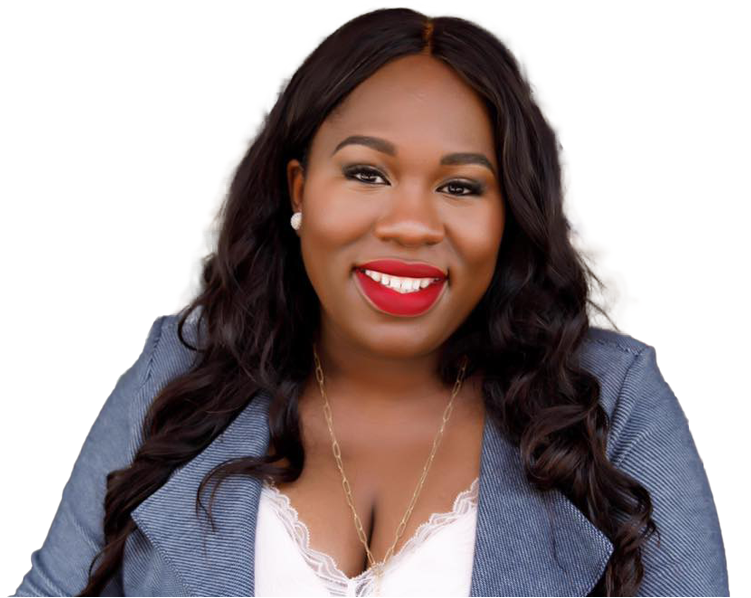
I am Ayesha Chidolue, Founder and Managing Attorney at The Chidolue Law Firm. My team helps individuals and families across the United States with VAWA self-petitions and other humanitarian claims. This guide explains what you need to understand before deciding your next step in finding legal representation.
This guide is written for that moment. It walks through how VAWA self-petitions work, how to evaluate an attorney, what questions to ask in a consultation, and what warning signs mean it’s time to keep looking. The goal is to help you move forward with information, not just hope.
What a VAWA Self-Petition Actually Requires
The Violence Against Women Act lets an abused spouse, child, or parent of a U.S. citizen or lawful permanent resident petition for immigration status on their own, on Form I-360, without the abuser’s knowledge or involvement.
To qualify, you generally have to show:
- A qualifying relationship to the abuser (spouse, child, or parent of an abusive U.S. citizen or LPR son or daughter).
- That you lived with the abuser at some point.
- That you experienced battery or extreme cruelty.
- Good moral character, generally for the three years before filing.
- If you’re petitioning as a spouse, that the marriage was entered in good faith.
USCISupdated its Policy Manual guidance on VAWA self-petitions in December 2025, sharpening what it expects as evidence of a good-faith marriage, cohabitation with the abuser, and good moral character. A case built around older standards is more likely to draw a Request for Evidence (RFE) or a Notice of Intent to Deny (NOID). That’s one reason it matters to find an attorney who works on VAWA cases specifically, not just immigration law broadly.
Real Talk: USCIS applies an “any credible evidence” standard to VAWA cases. That doesn’t mean any evidence goes — it means the agency is supposed to weigh what you actually have, even without a police report or medical record, rather than deny you for missing a specific type of document. A good attorney knows how to build a case around the evidence a survivor actually has, not the evidence a textbook says they should have.
Where People Actually Find VAWA Attorneys
There isn’t one single directory. In practice, people find the right attorney through a few overlapping paths.
Domestic violence and legal aid organizations
Local shelters, crisis lines, and legal aid societies keep referral lists for VAWA-experienced attorneys, and some represent survivors directly at no cost. This is often the safest starting point, since staff are trained to talk with survivors and won’t ask you to explain everything up front.
The American Immigration Lawyers Association (AILA)
AILA’s public directory lets you search attorneys by location and practice area, including humanitarian relief. It’s not a quality guarantee, but it confirms the attorney’s focus is immigration law.
The National Immigrant Women’s Advocacy Project (NIWAP)
NIWAP is a national resource center built specifically around VAWA, U visas, and related protections. It’s a strong place to find both training materials and referrals to attorneys and advocates with direct VAWA experience.
State and local bar referral services
Most state bars run a referral service, and some let you filter by practice area. Useful as a backup if the organizations above don’t turn up someone nearby.
Law school immigration clinics
Many law schools run immigration clinics supervised by licensed attorneys, often at no cost to the client. Availability varies by location and semester.
How to Evaluate an Attorney Once You’ve Found a Few Options
A VAWA case can take many months from filing to decision, sometimes longer. During that stretch, you may need to change your mailing address for safety, respond to an RFE, or simply have questions. Choosing an attorney is choosing who walks through that stretch with you.
Ask about VAWA experience specifically
“Do you handle immigration cases” isn’t the same question as “how many VAWA self-petitions have you filed.” Ask directly. Ask what happened with recent cases, in general terms. Ask whether they’re familiar with the December 2025 policy changes.
Ask how they build a case
A strong self-petition isn’t just a form. It’s a personal declaration written in your own voice, organized evidence, and a clear narrative that connects everything back to the legal requirements. Ask what the attorney’s process actually looks like — who drafts the declaration, how evidence gets organized, whether you’ll see the full petition before it’s filed.
Ask about communication and safety
Because confidentiality is central to VAWA cases, ask how the office handles a safe mailing address, who your point of contact will be, and what happens if you need to move.
Real Talk: No attorney can make USCIS decide faster. What they can do is prepare your case carefully, tell you honestly where it’s strong and where it’s thin, and keep your information secure. If a consultation is all reassurance and no specifics, that’s worth noticing.
Red Flags Worth Walking Away From
- A guaranteed approval. No ethical attorney can promise a specific outcome on any immigration benefit.
- Large upfront fees with no written agreement. A legitimate attorney will give you a clear, written fee structure.
- Vague answers about VAWA experience, especially if the conversation keeps steering back to general immigration services.
- No real answer about confidentiality — if they can’t explain how your case stays private from your abuser, that’s a problem.
- Unlicensed “notarios” or immigration consultants. In the U.S., only a licensed attorney or a DOJ-accredited representative can legally give immigration advice or represent you. Fraud from unlicensed practitioners is a well-documented risk in immigration cases and can cause damage that’s hard to undo.
Common Mistakes People Make While Searching
Waiting too long to call anyone. Many survivors wait until they feel “ready” with every document in hand. An early conversation, even before you have everything, helps you understand what actually matters to collect.
Choosing based on price alone. Cost is a real concern, and it’s fair to ask about it directly — including about free or reduced-fee options, which genuinely exist for VAWA cases. But the cheapest option isn’t always the one that builds the strongest case.
Leaving out parts of your history. Some people worry that a past immigration violation or an old arrest will disqualify them, so they don’t mention it. That just makes it harder for an attorney to plan around it. They can’t help with a problem they don’t know exists.
Relying only on what you read online. Policies change — USCIS updated VAWA guidance as recently as December 2025. What worked for someone else’s case, or what was true two years ago, may not apply to yours.
Frequently Asked Questions
Do I need a lawyer to file a VAWA self-petition?
No, it isn’t legally required. But given how detailed the evidentiary requirements are, most survivors find that experienced legal help strengthens the case significantly.
Will my abuser find out I filed?
VAWA self-petitions are confidential by law. USCIS is barred from disclosing information about your case to the abuser.
Can an attorney guarantee my case will be approved?
No. Be cautious of anyone who says otherwise before reviewing your situation in detail.
What if I can’t afford a private attorney?
Legal aid organizations, domestic violence advocacy groups, and law school clinics regularly take VAWA cases at no cost or reduced cost. Many prioritize these cases because survivors often have limited financial independence.
Can my children be included?
If you’re self-petitioning as an abused spouse, your unmarried children under 21 can generally be included as derivative beneficiaries. If you’re petitioning as an abused parent, derivatives generally aren’t available.
What happens after my I-360 is approved?
Depending on your category, you may be able to apply for a green card (Form I-485) right away or need to wait for a visa to become available. You may also be able to file concurrently with your I-360 at the same time. Your attorney should walk you through which path applies to you.
The Bottom Line
A VAWA self-petition asks a survivor to do something difficult: turn a painful, private history into a clear, well-documented case that a stranger at USCIS will evaluate. That’s not something anyone should have to figure out alone, and it’s not something that requires the most expensive attorney in town — it requires the right one.
Take the time to ask questions. Notice how you’re treated in that first conversation, not just what’s said. The right attorney will make you feel informed and safe, not rushed.
Before You File, Speak With The Chidolue Law Firm
If you are in an unsafe situation, do not wait. We provide a safe, compassionate, and multilingual environment to help you secure your future and your safety.
📞 Call The Chidolue Law Firm today at: ➡️ 678-233-2170 or ➡️ 678-325-1037
💬 For WhatsApp inquiries, contact us at: ➡️ 404-333-8751
This article is for general informational purposes and isn’t a substitute for advice from a licensed immigration attorney about your specific situation. If you’re currently in danger, contact the National Domestic Violence Hotline at 1-800-799-7233, or text “START” to 88788.