



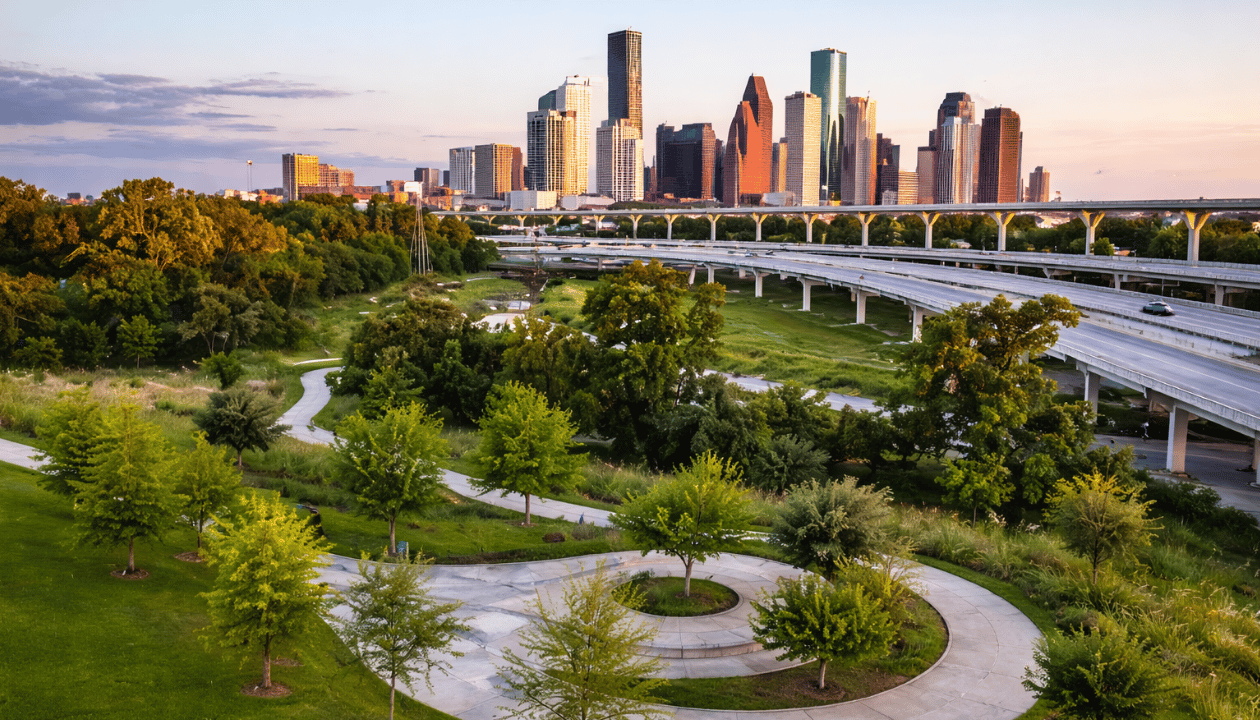
Houston’s rapid growth as an international city has made its diplomatic landscape harder to understand. Businesses, foreign nationals, and travelers often struggle to identify how consulates operate, where they are located, and which services they provide.
This complexity reflects Houston’s global reach. More than 91 countries maintain consular representation, forming the third-largest consular corps in the United States, after New York and Los Angeles.
In this guide, we examine Houston-area consular patterns, key locations, and how they reinforce the city’s role as a global gateway.
Diverse Immigrant Communities Driving Consular Activity
Houston’s extensive network of foreign consulates is closely tied to the size, diversity, and continuous growth of its immigrant population. As international communities expand and diversify, consular offices play a critical role in meeting diplomatic, legal, and community-based needs across the region.
Houston’s Foreign-Born Population at a Glance
One of the main drivers behind Houston’s large consular presence is the size of its immigrant population. Nearly one-quarter of the Houston metropolitan area’s residents are foreign-born, representing approximately 1.7 million people.
Within the city of Houston itself, the concentration is even higher. About 29.3 percent of Houston’s residents were born outside the United States, reinforcing the city’s position as one of the most multicultural urban centers in the country.
Growing Diversity Beyond Traditional Migration Patterns
Houston’s immigrant population is not dominated by a single nationality. While immigrants from Mexico account for roughly 37 percent of the foreign-born population, a clear majority now comes from other regions worldwide.
This shift has accelerated in recent years. Between 2006–2010 and 2017–2021, the share of Houston immigrants from countries other than Mexico rose from 54 percent to 63 percent, reflecting rapid diversification.
Rapid Growth and Rising Consular Demand
Some immigrant populations have grown at exceptional rates. Over roughly a decade, the number of Venezuelan-born residents increased by 464 percent, Nigerian-born residents by 251 percent, and Cuban-born residents by 259 percent in the Houston area.
As these communities expand, consulates play a critical role by issuing passports, assisting with visas, supporting legal documentation, and maintaining ties between diaspora communities and their home countries.
Humanitarian Migration and Refugee Arrivals
Houston has also emerged as a major destination for humanitarian migrants. After the 2021 U.S. withdrawal from Afghanistan, Houston became the top U.S. resettlement destination for Afghan refugees.
Out of 1,658 Afghan SIV holders who arrived in Texas, 569 settled in Houston, further increasing the need for consular coordination and immigrant support services.
Immigration as a Core Part of Houston’s Identity
Immigration is deeply embedded in Houston’s social and economic fabric. As of 2019, 48 percent of children in Houston had at least one immigrant parent, highlighting how central immigrant communities are to the city’s future.
From energy and healthcare to entrepreneurship and education, immigrants contribute across every sector. Consulates support this integration by assisting their nationals and strengthening cultural, economic, and institutional ties that reinforce Houston’s global character.
Immigration Services and Naturalization Activity in Houston
Houston’s immigration system is heavily shaped by the scale of its foreign-born population. A major driver of this activity is the USCIS Houston Field Office, which processes green cards, citizenship applications, and other immigration benefits for the region. Houston has even promoted itself as a future “Citizenship Capital,” reflecting sustained efforts to increase naturalization rates among eligible residents.
In Fiscal Year 2024, the USCIS Houston Field Office handled about 3.3 percent of all U.S. naturalizations nationwide, one of the highest shares of any field office. During the same year, approximately 26,300 Houston-area residents became U.S. citizens, ranking the metro area fifth nationally.
Community initiatives such as Naturalize Now, Houston support these efforts by offering legal guidance, language assistance, and outreach. Estimates suggest nearly 300,000 immigrants in the Houston area are eligible to naturalize in the coming years, underscoring the scale of ongoing civic integration.
Record-Breaking Naturalization Ceremonies
Houston’s commitment to citizenship gained national attention in July 2024, when the city hosted its largest naturalization ceremony ever. At a single event held at NRG Arena, 2,286 immigrants from 121 countries took the Oath of Allegiance and became U.S. citizens in one day.
By 2021, an estimated 700,000 Houston-area residents had already naturalized, and the number continues to rise. Despite this progress, hundreds of thousands of lawful permanent residents remain eligible, keeping naturalization outreach a central focus for local institutions.
Naturalization also brings measurable economic benefits. On average, immigrants experience a 9 percent earnings increase after becoming citizens, contributing billions in household income, taxes, and spending power across the Houston economy.
U.S. Visa Issuance and Houston’s Global Connections
Houston’s immigration patterns are also shaped by U.S. visa issuance abroad. Many residents originally arrived on nonimmigrant visas, while others depend on renewals for work or study. After pandemic disruptions, visa processing rebounded sharply. In Fiscal Year 2023, U.S. consular officers issued over 10.4 million nonimmigrant visas worldwide, the highest total since 2015.
That year included 830,000 student and exchange visitor visas, the highest since 2016. International students contribute an estimated $38 billion annually to the U.S. economy, with Houston-area institutions among the beneficiaries.
Visa issuance for skilled workers also reached record levels. In FY2023, the State Department issued about 590,000 visas for high-skilled workers and executives, supporting industries such as healthcare, engineering, and technology that are central to Houston’s economy.
Temporary Labor Visas Supporting Houston’s Workforce
Temporary worker programs have also expanded significantly. In FY2023, U.S. consulates issued a record 442,000 H-2A and H-2B visas for seasonal labor. About 90 percent of these visas went to applicants from Mexico and Central America.
Texas remains a major destination for these workers, and Houston-based industries such as construction, hospitality, landscaping, and food services rely on this legal labor pathway. These visas help meet workforce demand while offering alternatives to irregular migration.
Rising Immigrant Visa Issuance and Family Reunification
Permanent immigration has increased as well. In FY2023, the State Department issued approximately 563,000 immigrant visas worldwide, with totals exceeding 600,000 in 2024 as backlogs continued to clear.
Programs such as family-sponsored immigration, employment-based visas, and the Diversity Visa program, which provides 55,000 green cards annually, have contributed to Houston’s continued population growth. Many new arrivals join family members or fill specialized roles in the local workforce.
Modernization of Visa Processing and Consular Services
Consular operations have also undergone modernization. To reduce delays, the State Department expanded interview waivers and staffing, aiming for 90 percent of consulates to maintain visitor visa wait times under 90 days in 2024.
In early 2024, the Department launched a pilot program allowing limited domestic renewal of certain H-1B visas, the first such initiative since 2004. Initially covering about 20,000 applicants, the program reduces pressure on overseas consulates and benefits professionals living in cities like Houston.
Together, these reforms reflect a broader pattern of post-pandemic recovery and service improvement. Enhanced visa operations directly support Houston’s role as a destination for visitors, students, workers, and permanent residents.
Why Understanding Houston’s Consular and Immigration Landscape Is Important
Houston’s global engagement creates opportunity, but it also brings complexity. Consular services, visa processing, and immigration systems operate at a large scale, and even small misunderstandings can result in delays, missed deadlines, or lost opportunities. Understanding how these systems work is essential in a city shaped by constant international movement.
Working with accurate information and reliable guidance can help you understand how foreign consulates and U.S. immigration services operate in Houston, prepare complete documentation, navigate visa, residency, and citizenship pathways, and respond effectively to procedural challenges when they arise.
Houston’s extensive network of foreign consulates and highly active immigration institutions reflects a city deeply connected to the world. Many individuals, families, and organizations rely on clear guidance to successfully navigate these systems and avoid unnecessary complications.
Move Forward with Confidence in a Global City
Don’t let confusion about consular or immigration processes stand in the way of your plans. Get the clarity you need to move forward without delays or uncertainty.
📞 Call The Chidolue Law Firm today at:
➡ 407-995-6567
➡ 678-325-1037
💬 For WhatsApp inquiries, contact us at:
➡ 404-333-8751
Let clear understanding guide your next steps. Confidence begins with knowing how the system works.