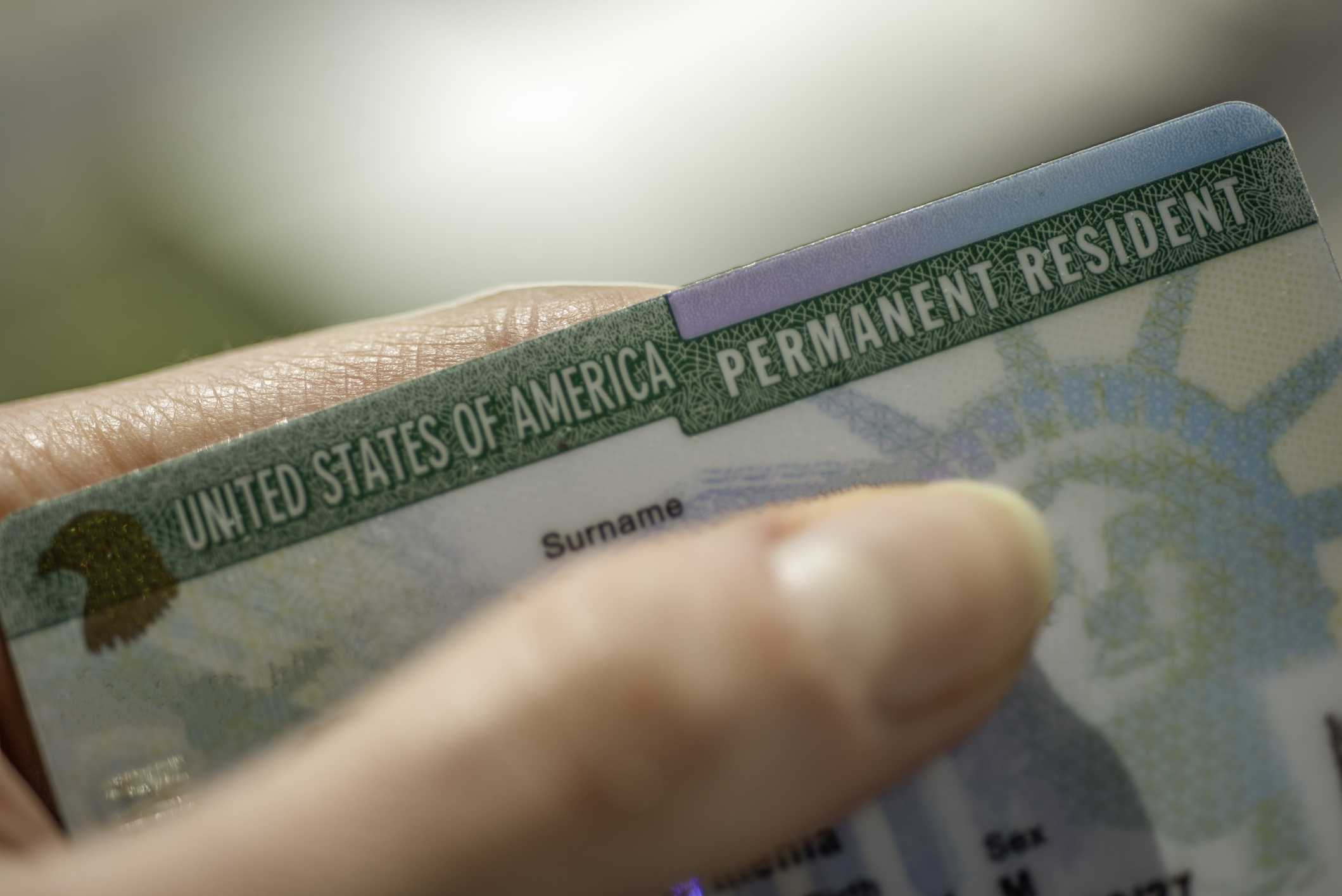






Bringing a brother or sister to live in the United States as a permanent resident is possible, but it involves a multi-year process under U.S. immigration law. Only U.S. citizens (age 21 or older) can sponsor their siblings for immigration.
Lawful permanent residents (green card holders) are not eligible to petition for siblings. In other words, this path is about U.S. citizens reuniting with family, as siblings do not qualify as “immediate relatives” in immigration terms.
Below, we outline the eligibility requirements, application steps, and expected timeline for a U.S. citizen to bring a sibling to the U.S. in 2025.
Eligibility to Sponsor a Sibling
U.S. Citizenship and Age:
The petitioner (sponsor) must be a U.S. citizen at least 21 years old. You can be a citizen by birth or through naturalization; in either case, you’ll need to prove your U.S. citizenship. Acceptable evidence includes a U.S. passport, a birth certificate (if born in the U.S.), a Consular Report of Birth Abroad (if born abroad to American parent(s)), a naturalization certificate, or a citizenship certificate. (For example, a copy of your naturalization certificate or U.S. passport would suffice as proof of citizenship.)
Qualifying Sibling Relationship:
The person you are sponsoring must be your sibling, meaning that at least one parent is in common. This includes biological brothers/sisters, as well as half-siblings and certain step-siblings or adopted siblings. Immigration law recognizes half-siblings (sharing a common father or mother) and step-siblings as long as the familial relationship was established before the child turned 18. Adopted brothers or sisters count too if the adoption occurred before the child was 16 years old. When filing, you must provide documents to prove the sibling relationship:
Sponsor’s Financial Ability:
While not a requirement to file the initial petition, note that eventually the U.S. citizen petitioner will need to act as a financial sponsor. This means you’ll have to submit an Affidavit of Support (Form I-864) during the immigrant visa stage to show you can financially support your sibling (and their immediate family) so they won’t become a public charge. Ensure you meet the income requirements for your household size when that time comes.
Who Can Be Sponsored:
You can sponsor a brother or sister of any age or marital status – there is no age requirement for the sibling, and they may be married or unmarried. However, spouses of siblings and children of siblings can automatically immigrate as derivatives under the same petition. In fact, you do not need to file separate petitions for your sibling’s spouse or for any unmarried children under 21; they are included in your sibling’s fourth-preference immigrant visa case.
For example, if your brother has a wife and two young children, they can all receive green cards as part of the same family-based petition (as long as the children are under 21 and unmarried at the time of visa issuance). This family inclusiveness helps with family reunification by allowing the principal immigrant (your sibling) to bring their nuclear family along.
Who Cannot Be Sponsored:
U.S. immigration law does not allow green card holders (permanent residents) to sponsor siblings. If you are a lawful permanent resident who wants to bring a sibling, you would first need to naturalize as a U.S. citizen to become eligible. Additionally, other relatives like cousins, nieces/nephews, or grandparents cannot be directly sponsored under family immigration categories (they would have to seek other routes). Only the specific categories of relatives defined in the law qualify for family-sponsored immigration. Siblings of U.S. citizens fall under the “Family Fourth Preference” (F4) category, which is the only category that covers brothers and sisters of U.S. citizens.
Immediate Relatives vs. Family Preference Categories
It’s important to understand that siblings are not classified as “immediate relatives” under U.S. immigration law. Immediate relatives are only the spouse of a U.S. citizen, unmarried children under 21 of a U.S. citizen, and the parent of an adult U.S. citizen. Immediate relatives enjoy special privileges – most notably, immigrant visas for immediate relatives are unlimited and immediately available once the petitions are approved. There are no annual caps or waiting lists for immediate relatives, so they can proceed directly to applying for a green card (either via adjustment of status or consular processing) without delay.
By contrast, siblings fall under the family-sponsored preference system, which has annual numerical limits. Brothers and sisters of U.S. citizens are in the Fourth Preference (F4) category, the lowest priority among family visas. Each fiscal year (Oct 1–Sept 30), only a limited number of F4 immigrant visas can be issued. For example, under the Immigration and Nationality Act, the F4 category is allocated about 65,000 immigrant visas per year, plus any unused visas from the higher family preference categories. In FY2025, the overall cap for all family-sponsored immigrants is 226,000 (with per-country limits of about 7% of that total), and siblings of U.S. citizens get the share noted above. Because demand far exceeds these numbers, a queue develops based on priority dates.
Priority Date:
When you file the I-130 petition for your sibling, the date USCIS receives your petition becomes your sibling’s priority date. This priority date is essentially your sibling’s place in line for an immigrant visa. Immigrant visas in the F4 category are issued in the chronological order of priority dates, as slots become available. Your sibling cannot receive a green card until their priority date becomes “current”, meaning it is their turn in line according to the State Department’s Visa Bulletin.
Visa Bulletin & Wait Times:
The U.S. Department of State releases a Visa Bulletin each month that shows which priority dates are currently being served for each category and country. Siblings of U.S. citizens often face the longest wait times of any family preference category, because F4 is oversubscribed (too many applicants for too few visas).
As of 2025, the wait for a sibling visa can easily exceed 10 years and often stretches to 15-20+ years. The exact wait time depends on the sibling’s country of origin due to per-country limits – applicants from countries with many applicants (such as Mexico, India, or the Philippines) typically wait the longest.
For instance, the September 2025 Visa Bulletin’s Final Action Dates for F4 show that Mexican siblings with petitions filed in March 2001 were finally being processed in 2025, over two decades later. For most other countries, the cutoff dates in 2025 were around 2006–2008, implying waits on the order of 15+ years. These extensive backlogs mean that bringing your sibling to the U.S. is a long-term undertaking.
Filing the I-130 Petition (Form I-130 Petition for Alien Relative)
The first step to bring your sibling to the U.S. is for the U.S. citizen to file Form I-130 (Petition for Alien Relative) with U.S. Citizenship and Immigration Services (USCIS). This petition establishes the qualifying family relationship. Here’s what the I-130 filing process entails:
Form and Filing Fee:
You must complete Form I-130 with all required information about you (the petitioner) and your sibling (the beneficiary). As of 2025, the filing fee for Form I-130 is $625 if filed online (or $675 by mail). This fee is paid to USCIS when submitting the petition. You cannot file a single I-130 for multiple siblings – a separate petition (and fee) is required for each sibling you sponsor.
Note: You do not need separate petitions for your sibling’s spouse or minor unmarried children; they are included on the principal sibling’s petition as derivative beneficiaries.
Make sure to use the current edition of the form and follow the filing instructions (USCIS allows online filing through their account system, which can be faster and comes with a slightly lower fee than paper).
Required Documentation:
Along with the petition, you (the sponsor) will need to submit supporting documentation to prove the family relationship and your eligibility. At a minimum, include:
- Proof of U.S. Citizenship: A copy of your U.S. passport, U.S. birth certificate, Naturalization Certificate, Certificate of Citizenship, or Consular Report of Birth Abroad. This shows USCIS that the petitioner meets the citizenship requirement.
- Birth Certificates: Copies of both your birth certificate and your sibling’s birth certificate, demonstrating that you share at least one common parent. The names of the parents on both documents will be compared to establish the sibling relationship.
- Marriage/Adoption Documents (if applicable): If you and your sibling are siblings through adoption or step-parents, include the additional evidence mentioned in the eligibility section (e.g. adoption decree for adopted siblings; marriage certificates and divorce decrees for step-family or paternal half-siblings to show the chain of relationships). This proves that even without a common birth parent on both birth certificates, a legal sibling relationship exists.
- Name Change Proof: If either of you has a different name now than at birth (due to marriage or other reasons), include legal proof of the name change (such as a marriage certificate, divorce decree, or court order) so that all documents can be correlated to the correct individuals.
Ensure that all copies are clear and legible. It’s generally not required to send original documents at the I-130 stage (unless specifically requested by USCIS). If any document is not in English, include a certified translation. By providing all required documentation upfront, you help avoid delays or requests for evidence.
Filing the Petition:
You can file the I-130 online via the USCIS website (which is typically quicker and allows you to track status electronically) or by mailing a paper form to the designated USCIS Lockbox. Double-check that every section of the form is completed accurately and sign the petition. Mistakes or omissions can result in rejection or lengthen processing times.
USCIS will reject petitions that are not filed correctly, for example, if required fields are missing or if the wrong fee is attached. The best way to ensure a smooth process is to file a complete and accurate petition package from the start – this is the only way to potentially avoid delays given the otherwise lengthy timeline.
Receipt Notice:
Once your petition is received, USCIS (which is the government immigration services agency processing the petition) will issue a receipt notice (Form I-797C) with a case number. This typically arrives a few weeks after filing. The receipt notice date marks the priority date for your sibling’s case. Keep this notice safe; you’ll use the case number to check status. You can use the USCIS online case status tool to track the petition’s progress.
USCIS Processing Time:
The I-130 petition must be reviewed and approved by USCIS before the case moves forward. USCIS processing times for sibling petitions can vary, but are often on the order of several months to over a year for the initial petition adjudication.
As of 2025, typical processing might be around 14 or 35 months for an I-130 of this type, depending on the service center workload. This is just the petition approval wait, not the total time for your sibling to actually immigrate.
Once USCIS approves the petition, they will send you an approval notice (Notice of Action) and forward the case to the next stage. However, **approval of the I-130 does not mean an immigrant visa is available yet – it simply means your petition was valid. Your sibling enters the visa queue if one is not immediately available.
The Waiting Period and Priority Date Queue
After USCIS approves the I-130 petition, the case is sent to the National Visa Center (NVC) (run by the U.S. Department of State) for the immigrant visa pre-processing, but NVC will not take action until a visa is close to being available. Essentially, your approved petition sits inactive until the sibling’s priority date approaches the cut-off date listed in the Visa Bulletin. Given the long wait times for F4, this dormant period can last well over a decade. Patience is required.
While waiting, you should monitor the Visa Bulletin periodically. The Visa Bulletin has two relevant charts for family cases: “Dates for Filing” and “Final Action Dates.” The Final Action Date for F4 is the priority date that is currently being processed for visa issuance. The Dates for Filing (often a bit more advanced) indicate when applicants may start submitting documents to NVC in preparation for the interview. In practice, when the Visa Bulletin shows that your sibling’s priority date is before the listed filing date for their country in F4, it means NVC will invite you to begin the next steps. NVC will send a letter or email asking the beneficiary to assemble and submit the required documentation and fees in order to apply for an immigrant visa.
During this NVC stage, you (the petitioner) and your sibling will need to do the following:
- Affidavit of Support: The petitioner must submit Form I-864 (Affidavit of Support) with financial evidence (tax returns, job letters, etc.) to prove they can support your immigrant sibling and their family. This is a legal contract that you will financially support them if needed. It’s required for family-sponsored immigrants to ensure they will not become a public burden.
- Immigrant Visa Application: The sibling (beneficiary) will submit an Online Immigrant Visa Application (Form DS-260) through the Consular Electronic Application Center (CEAC). This is essentially the actual green card application for those who will do consular processing abroad. They will answer questions about their background, submit civil documents (birth certificate, police clearances, marriage certificate if applicable, etc.), and pay the visa application fee.
- Civil Documents: The required documents typically include the beneficiary’s birth certificate, passport biographic page, police clearance certificates from any country lived in long-term, marriage or divorce certificates (if applicable), military records (if applicable), etc. NVC will provide a detailed list tailored to the beneficiary’s situation and country.
- Fee Payments: The State Department charges fees for immigrant visa processing (separate from the I-130 fee). There’s usually an NVC affidavit of support fee and an immigrant visa fee. For example, these might be on the order of a few hundred dollars each (exact amounts can change). These must be paid before the case can move to an interview.
NVC will hold the case until the priority date is actually current (i.e., the Final Action Date is reached). Once everything is in order and a visa number is available, NVC will schedule an interview appointment for your sibling at the appropriate U.S. embassy or consulate in their home country.
Consular Processing vs. Adjustment of Status
| Aspect | Consular Processing | Adjustment of Status (I-485) |
| Where it happens | At a U.S. consulate abroad (in the sibling’s country of residence) | Inside the U.S., through USCIS |
| Main Step | Immigrant visa interview with a consular officer | Filing Form I-485 and attending a USCIS interview |
| Eligibility Check | Consular officer verifies relationship, admissibility (criminal, medical, etc.) | USCIS officer reviews lawful status, eligibility, and admissibility |
| Outcome | Immigrant visa stamped in passport; becomes lawful permanent resident upon U.S. entry | Status adjusted to permanent resident without leaving the U.S. |
| Proof of Status | Visa in passport serves as temporary green card until physical card arrives | USCIS approval leads to issuance of physical green card |
| Commonality | Most common route for sibling beneficiaries | Less common, since maintaining lawful temporary status for many years is difficult |
| Limitations | Must travel abroad for interview | Only possible if sibling maintained lawful status (no overstays/unauthorized work) |
Challenges and Things to Consider
No Interim Benefits:
Filing an I-130 for a sibling does not grant any temporary status or benefits. During the long waiting period, your sibling cannot reside in the U.S. simply because a petition is pending. In fact, a pending or approved I-130 can make obtaining temporary visas like a tourist or student visa more difficult due to “immigrant intent.” While exceptions exist, most applicants will have to remain outside the U.S. until a green card is available.
No Expedited Processing:
Unlike some categories, there is no premium or fast-track option for sibling petitions. USCIS rarely expedites these cases, except for extraordinary humanitarian reasons. The priority date system governs availability, and visas are issued strictly in order. The only control petitioners have is ensuring timely filing, accurate paperwork, and quick responses to USCIS requests to avoid avoidable delays.
Alternatives:
While waiting, some families explore other options. A sibling may qualify independently for an employment-based visa, diversity visa lottery, or a temporary visa like H-1B or F-1. However, once an I-130 is filed, obtaining new non-immigrant visas becomes challenging. If they do come on a temporary visa, maintaining lawful status is critical; violations could prevent adjustment of status later.
Changes in the Law:
Immigration laws can evolve. Congress could amend or eliminate the siblings category, or reduce backlogs. As of 2025, the F4 category still exists but remains heavily backlogged. Families should plan under current rules but stay alert to potential reform.
Ready to Sponsor Siblings With Confidence?
Stress about green card applications, legal status, or delays at the National Visa Center can feel overwhelming. Whether proving ties through different mothers, addressing limited exceptions, or planning to adjust status, legal guidance is key to reuniting with a family member.
The Chidolue Law Firm prepares documentation, navigates Citizenship and Immigration Services, and protects your sibling’s path to permanent residence. We stand ready to guide you on a case-by-case basis.
📞 Call The Chidolue Law Firm today at:
➡ 407-995-6567
➡ 678-325-1037
💬 For WhatsApp inquiries, contact us at:
➡ 404-333-8751
Let’s move your case forward with clarity and care.