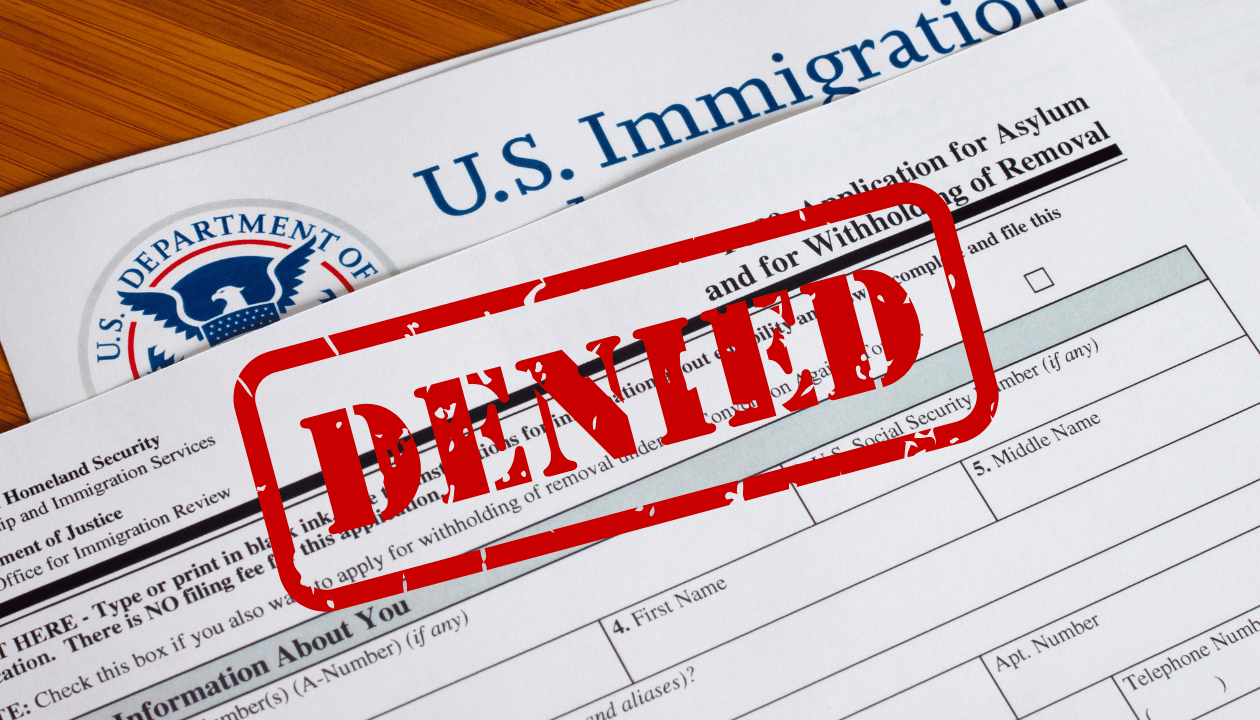




Here is the news Nigerian families have been waiting six months to hear. Fiance visa processing in Nigeria is working. K visa applicants are being scheduled, interviewed, and approved at the U.S. consulate in Lagos despite the partial ban that has frozen so much else. One of my own clients was approved at her visa interview last week and is now reunited with her American citizen fiance, building the life they had been planning for almost two years.
That is the headline. The longer answer takes more care, because the partial ban is real, the conditions are tighter than they used to be, and there is one mistake I see couples make that ends the K-1 pathway entirely. So let me lay out what is actually happening, why the K-1 is still a working option for Nigerians eligible to file when most other visa categories are not, and what it takes to get a case approved in the current environment. Anyone who is a US citizen engaged to a Nigerian citizen should keep reading.
I am Ayesha Chidolue, Founder and Managing Attorney at The Chidolue Law Firm. My team handles K-1 fiance visa cases for couples across Nigeria, and what you are about to read is the picture from inside our active caseload as of this week. For further information beyond what U.S. Citizenship and Immigration Services publishes on its website, this article walks through what the process actually looks like on the ground.
Why Nigeria Is in This Strange In-Between Place
To understand why fiancé visas are moving when other visas are not, you have to understand which restrictions Nigeria actually falls under. There are two separate sets of rules, and they treat the K-1 very differently.
The partial ban under Proclamation 10998
Effective January 1, 2026, Presidential Proclamation 10998 placed Nigeria under what is called a partial suspension. The proclamation suspends the entry of Nigerian nationals as immigrants, meaning anyone trying to get a green card through the immigrant visa process at a U.S embassy abroad, and also covers B-1 and B-2 visitor visas plus F, M, and J student and exchange visitor visas. That is a sweeping list, and for many immigrant visa applicants from Nigeria it has effectively shut down the normal paths into the United States.
But the partial ban does not cover every visa category. K-1 fiancé(e) visas, which are non-immigrant visas legally even though they lead to a green card down the road, sit outside the scope of the immigrant visa suspension. That technical classification is doing enormous practical work right now. It is the reason fiance cases keep moving while CR-1 spousal cases for the same couples would be stuck. The Lagos consulate functions as the US embassy contact point for this category in practice, and the U.S. citizen fiance back home plays a central role in keeping the file moving. A petitioning U.S citizen fiancé partnering closely with their attorney is often what separates a smooth case from a stalled one.
The State Department 75-country pause
On January 21, 2026, the State Department imposed a separate indefinite pause on immigrant visa issuance for nationals of 75 countries, including Nigeria, citing public charge concerns. This is a second layer on top of the proclamation. But here again, the K-1 is exempt because it is a nonimmigrant visa, not an immigrant visa. Couples from Nigeria, Brazil, Colombia, Cuba, Venezuela, and other partial-ban countries who are pursuing a K-1 are not caught in this 75-country pause.
Consular operations in Lagos and Abuja are open
The U.S. consulate general in Lagos and the embassy in Abuja are both actively providing visa services to applicants in Nigeria. The Lagos consulate handles the bulk of immigrant and K visa interview appointments for Nigerian applicants. Security advisories for parts of Nigeria have changed over the spring, but consular operations have continued. Cases are being scheduled and adjudicated.
Real talk: If you are a U.S citizen engaged to a Nigerian fiance and you have been delaying because you assumed the partial ban shut your case down, you have been waiting on bad information. The K-1 is the one major family-reunification pathway that has stayed open for partial-ban countries through this entire stretch. The window is open. The question is what you do with it.
The Mistake That Kills Your K-1 Pathway
I have to put this near the top because it is the single most expensive mistake I have watched couples make this year. If you are engaged to a Nigerian citizen and you are considering whether to marry abroad before bringing your partner to the United States, do not do it. Not yet. Talk to an immigration attorney first.
The reason is technical, but the consequence is permanent. The K-1 is designed exclusively for people who are still engaged. The moment a legal marriage occurs anywhere in the world, K-1 eligibility ends. Your only remaining family-based path then becomes the CR-1 or IR-1 spousal immigrant visa, and those are exactly the categories caught in the partial ban and the 75-country pause. A couple who could have gotten a K-1 approval in 10 to 16 months might find themselves stuck indefinitely after marrying.
I have spoken with families who lost months of progress and their entire strategic advantage by marrying before consulting counsel on timing. The right sequence in this environment is K-1 visa first, travel to the United States, marry within 90 days of entry, then file for adjustment of status to lawful permanent resident from inside the country. That sequence works. The reverse sequence does not.
How the K-1 Process Actually Works for a Nigerian Fiance
The K-1 visa is a multi-stage process that crosses two federal agencies and one consulate. Here is what the path looks like from petition to entry.
Stage 1. USCIS petition (Form I-129F)
The U.S. citizen petitioner files Form I-129F, Petition for Alien Fiancé(e), with USCIS to start the case. The petition has to demonstrate that the couple has met in person within the last two years, intends to marry within 90 days of the foreign fiance’s entry, and is legally free to marry. Required documentation includes the petitioner’s proof of U.S. citizenship, evidence of a bona fide relationship, and the Nigerian fiance’s birth certificate and passport biographical page.
USCIS approves K-1 petitions in roughly 7 to 12 months on the current schedule, though processing times shift. Once approved, the petition is forwarded to the National Visa Center, which then sends the case to the U.S. consulate general in Lagos for the consular stage.
Stage 2. National Visa Center and consular preparation
Once the National Visa Center receives the approved petition, it assigns the case number and forwards the file to Lagos, which functions as the USCIS office abroad for K-1 cases in practice even though USCIS itself is a separate agency. The Nigerian fiance, called the beneficiary, must submit Form DS-160, the online nonimmigrant visa application, and receives a visa application confirmation page that has to be brought to the interview. Required fees are paid at this stage. The beneficiary also gathers their civil documents, including a Nigerian birth certificate issued by the National Population Commission (NPC), police certificates from the Nigeria Police Force for every country lived in for six months or more since age 16, and any death certificate or divorce decree if there were prior marriages. If there are criminal records of any kind, those have to be disclosed and addressed in advance, not discovered at the interview.
Only NPC birth certificates are accepted for U.S. immigration. Hospital or local government birth records are not enough. This is one of the most common stumbling blocks for Nigerian applicants and worth handling early. Note that the petitioner will also need to pay the affidavit of support filing and gather required documents that prove income, including recent tax returns.
Stage 3. Medical examination
Every K-1 visa applicant must complete a medical exam with an embassy-approved physician in Nigeria before the visa interview. Schedule your medical exam as soon as you receive your appointment date, because the medical exam results have to be sealed and presented at the consular interview itself. Vaccinations are recommended but not always mandatory at the K-1 stage, though they will be required at the adjustment of status stage after marriage. The medical report becomes part of the consular file.
Stage 4. The consular interview in Lagos
Nigerian K-1 visa interviews occur at the U.S. consulate in Lagos. The interview itself typically lasts only a few minutes, but it can feel intense and the consular officer’s decision is largely shaped by what is in front of them on the day. A two-visit requirement for K visa interviews took effect on January 1, 2025, splitting the process into a first visit for in person document review and a second visit for the actual interview with a consular staff member.
Bring original or certified copies of every required document, plus one photocopy of each. The consular officer wants to see the original documents handed across the window and will keep the copies for the file. The interview is the moment when the petitioner’s Form I-134 affidavit of financial support, the relationship evidence, and the beneficiary’s civil documents all come together.
Stage 5. Visa issuance, entry, marriage, and green card
If the consular officer is satisfied, the K-1 is approved at the interview, and the visa is issued shortly after, typically within a few days to a few weeks. The K-1 is valid for six months for entry and then for 90 days after admission. The couple must marry within those 90 days. After marriage, the Nigerian spouse files Form I-485 to adjust status, completing the move to permanent resident status without leaving the country.
Total timeline for a Nigerian K-1 case in 2026 is roughly 10 to 16 months from filing Form I-129F to the visa interview, with USCIS taking 7 to 12 months on the petition and National Visa Center processing plus the embassy interview taking another 3 to 5 months. Total cost across USCIS fees, DS-160, and consular fees runs roughly $940, excluding the medical examination, travel costs, and the later adjustment of status filing.
What Has Changed About Nigerian K-1 Cases in 2026
The K-1 still works for Nigerian applicants. But it works in a different operational environment than it did two years ago, and you should know what to expect.
- Extreme vetting has tightened. The State Department is applying what it calls extreme vetting to K-1 cases from partial-ban countries. Expect longer administrative processing after the interview, more detailed questions about the relationship, and closer scrutiny of every document. None of this is fatal. It just means weak files get caught faster than they used to.
- Document standards are stricter. Police certificates must come from the Nigeria Police Force, and a police clearance certificate is required for applicants aged 16 and older. Birth certificates must be NPC-issued. Tax returns from the U.S. petitioner are increasingly scrutinized as part of the Form I-134 financial support showing.
- The two-visit appointment structure is now standard. The split between document review and interview means more planning around travel to Lagos for applicants who live elsewhere in Nigeria.
- Bring originals and photocopies. Show up to the embassy or consulate appointment with original documents and one photocopy of each. Missing documents at the interview is a leading cause of refusals that could have been avoided.
- Watch for case status changes after the interview. Some Nigerian K-1 cases come back from administrative processing within days. Others take months. The pattern is unpredictable, and the consular officer rarely explains the delay in writing.
Real talk: If you have been told by anyone, friends, family, or even another attorney, that the K-1 pathway is closed for Nigerians, get a second opinion. We have cases being approved right now. The information that the K-1 is shut down is six months out of date and was never accurate to begin with.
FAQs
Can a green card holder petition for a Nigerian fiance through the K-1?
No. The K-1 is available only to U.S. citizens. A lawful permanent resident cannot sponsor a foreign citizen fiance through this category. The lawful permanent resident option is to marry first and then file an I-130 spousal petition, but in the current environment with Nigeria caught in the partial ban, that path is much slower than the K-1.
What happens if my Nigerian fiance has a prior marriage?
A prior marriage is not a problem for the K-1 as long as it was legally terminated. You will need to include the death certificate or divorce decree from each prior marriage, in original or certified copy form, for both partners. Missing these documents at the interview is one of the more common reasons K-1 cases get held up in administrative processing.
My fiance lives in Abuja, not Lagos. Can the interview happen there?
K-1 interviews for Nigerian applicants are centralized at the U.S. consulate in Lagos. Abuja handles other visa services but the K-1 interview appointment will be in Lagos. Plan for travel time and a place to stay during the two-visit appointment process.
Can my Nigerian fiance enter the United States as a visitor while we wait for the K-1?
This is risky right now and I generally advise against it. Nigerian visitor visas are subject to the same partial ban, B-1 and B-2 entries are restricted, and even when a visitor visa is issued, attempting to enter the United States with the obvious intent to marry and file for adjustment can be treated as visa fraud. The K-1 exists precisely so couples do not have to take that risk.
What if my K-1 visa was approved before January 2026 but my fiance has not traveled yet?
Visas issued before the partial ban took effect on January 1, 2026 generally remain valid as long as they have not been revoked. Your fiance can still use the K-1 to enter the United States, subject to the standard six-month validity window from the date of issuance. If the window has already closed, talk to an attorney about whether to refile or pursue another option.
Does the recent court ruling vacating USCIS pause policies affect my K-1 case?
Not directly. The Dorcas v. USCIS ruling from June 5, 2026 vacated four USCIS adjudication-pause policies that affected cases inside the United States. Your K-1 case at the Lagos consulate is governed by the State Department, not USCIS, so the ruling does not change the consular side of your process. But if your USCIS Form I-129F was caught in any USCIS slowdown, the ruling helps clear the way for petition adjudication to move forward.
How do I know if my case is ready to file?
The K-1 has more documentation requirements than people expect, and a weak file in this environment is much more likely to face a refusal or extended administrative processing than it was two years ago. Before filing, you want to be sure the petitioner can document U.S. citizenship and income, the couple can demonstrate a bona fide relationship with substantial evidence, and the Nigerian fiance can produce NPC birth certificates, police certificates, and a clean civil document record. If any of those pieces are shaky, fix them before filing rather than after.
Engaged to a Nigerian Citizen? Schedule a Consult.
If your engagement has been on hold because you believed the partial ban closed your options, this is the conversation to have. The pathway is open. The cases are moving. And the difference between a smooth K-1 approval and a stuck case usually comes down to decisions made before the petition is ever filed.
At The Chidolue Law Firm, we work with U.S. citizens and their Nigerian fiances through every stage of the K-1, from the initial I-129F petition through the Lagos consular interview, the entry into the United States, the marriage, and the eventual green card. We have cases moving right now, including the recent approval that prompted this article, and we can tell you honestly whether your situation fits the K-1 pathway or whether a different strategy makes more sense.
📞 Call The Chidolue Law Firm today at:
➡ 678-233-2170
➡ 678-325-1037
💬 For WhatsApp inquiries, contact us at:
➡ 404-333-8751
Schedule a consult now, while the window is open, and let us help you bring your fiance home.