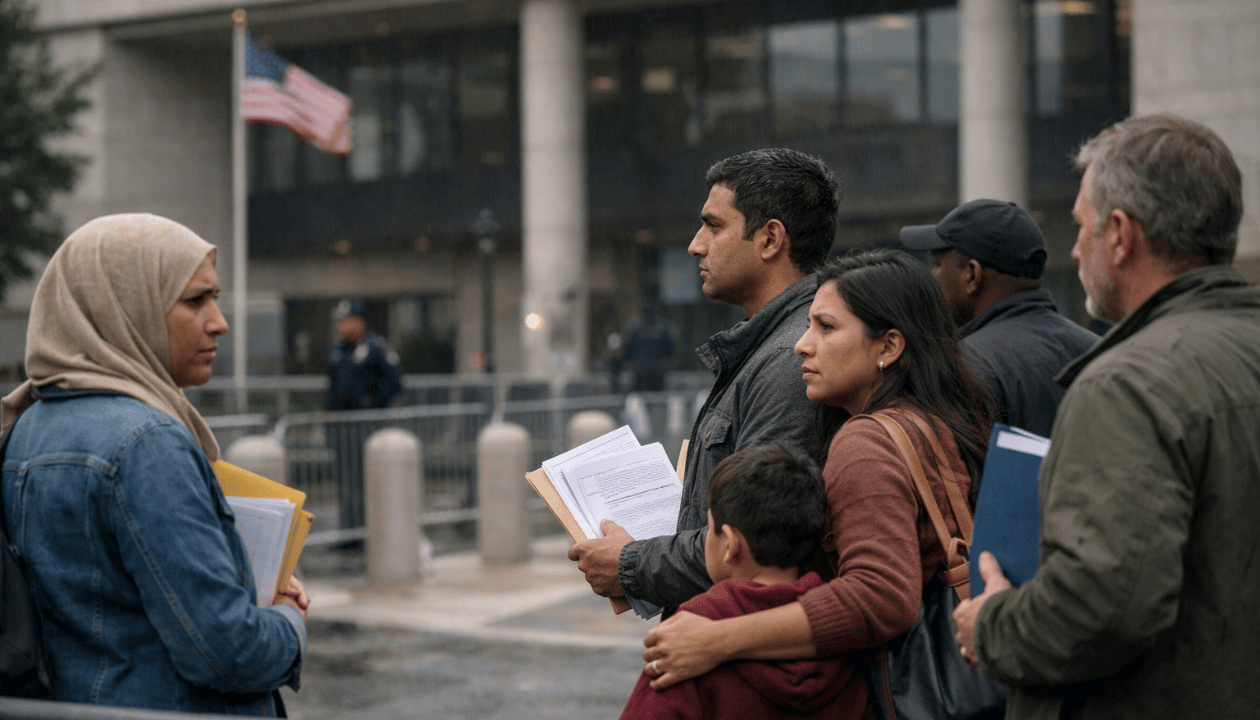





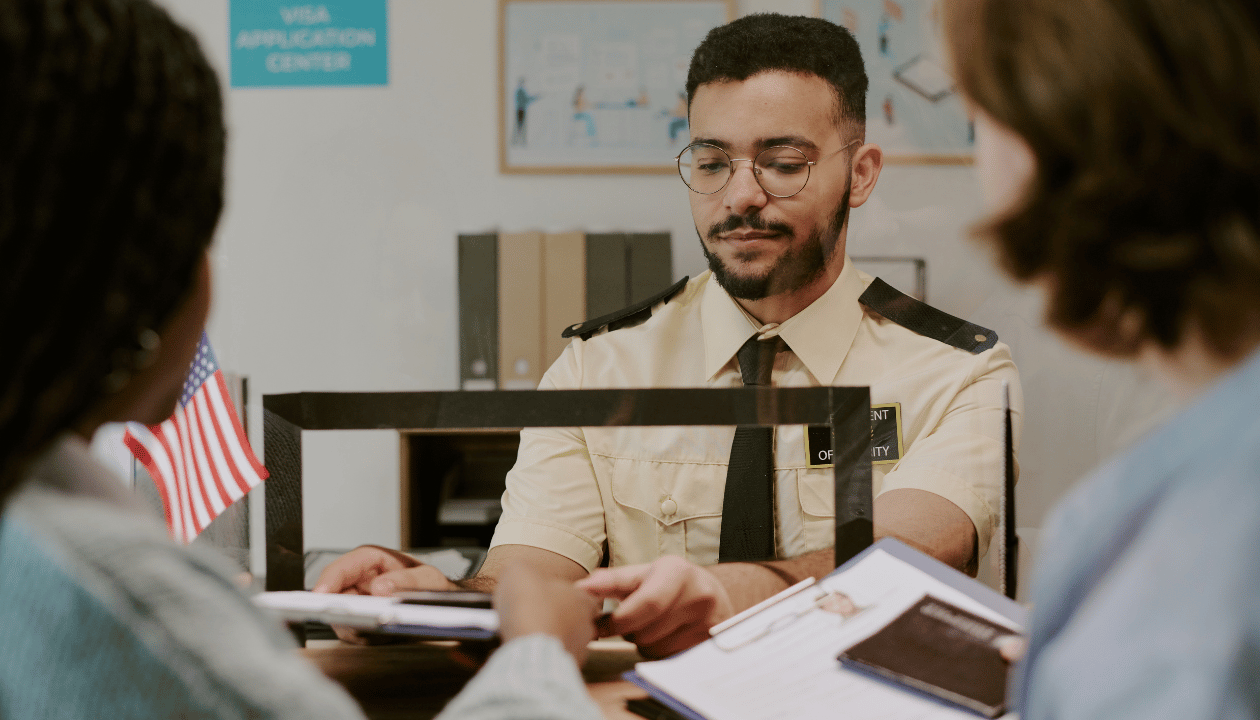
Form DS-5535, titled “Supplemental Questions for Visa Applicants,” is a questionnaire used by the U.S. Department of State to collect additional information from certain visa applicants. It was introduced in 2017 as part of “extreme vetting” measures to enhance security screening.
Consular officers only require DS-5535 for a subset of applicants, typically those flagged for extra scrutiny based on background, travel history, or other security-related criteria. In practice, if a visa applicant’s profile triggers concern, for example, due to ties to certain countries or a “hit” on a watchlist, the consular officer can refuse the visa under INA §221(g) (administrative processing) and request the DS-5535 form.
The form’s purpose is to gather detailed personal data that goes beyond the standard visa application, helping officials verify identity and check for security threats. This process stems from post-9/11 and 2017 policies aiming to prevent individuals with terrorist or other national security ineligibilities from obtaining visas.
In short, DS-5535 exists as a tool for “extreme” background vetting, allowing the government to dig deeper into an applicant’s history, including their social media, before granting a U.S. visa.
What Information Does DS-5535 Collect?
When DS-5535 is requested, applicants must provide an extensive 15-year history of personal data and a 5-year history of online activity. The form asks for:
- Travel History: All countries visited in the last 15 years (with dates, locations, and purpose of travel).
- Past Passport Numbers: Any other passports ever held (to track identities).
- Previous Addresses: All addresses where the person lived in the past 15 years.
- Employment History: All occupations and employers over 15 years, with descriptions if applicable.
- Family Details: Names and dates of birth of siblings, children, and current or former spouses/partners not already listed.
- Contact Information: All phone numbers and email addresses used in the last 5 years.
- Social Media Usernames: All social media “handles” or usernames used in the past 5 years on any platforms where the applicant had a public profile. Notably, the form asks for the platform name and the account identifier for each social site.
How DS-5535 Goes Beyond the Regular DS-160
DS-160 already asks most applicants to list recent social media handles, but DS-5535 expands this dramatically. Instead of a short snapshot, DS-5535 builds a full personal dossier, covering 15 years of travel, identity documents, addresses, and employment. It also captures every email, phone number, and online alias used in the past 5 years. This makes DS-5535 a deeper security review designed to verify identity, spot inconsistencies, and assess potential security flags that a standard application might not detect.
Social Media Screening Rules & Privacy Clarifications
The form does not ask for passwords or private account access. The State Department states that officers only review publicly available information and that privacy settings will not be circumvented. Applicants with no social media presence can simply answer “None,” and this alone should not be treated negatively. However, evolving security trends suggest that highly restricted or unusual account activity may still draw attention during administrative processing. Overall, DS-5535 allows the government to map an applicant’s identity, background, and online footprint with far greater detail than the regular visa forms.
How Social Media Screening Works Through DS-5535
Social media screening is one of the main reasons DS-5535 exists. When an applicant is given this form, they must list all social media usernames they have used in the last five years. Those identifiers are then reviewed by consular officers and specialized vetting units as part of “administrative processing.”
This review sits on top of the regular DS-160/DS-260 checks. According to a 2023 notice in the Federal Register, the State Department estimates that around 50,000 visa applicants per year are asked to complete DS-5535 in addition to the standard visa forms.
Consular review of an applicant’s online footprint
First, the consular officer can manually search the applicant’s profiles on platforms like X (Twitter), Facebook, Instagram, LinkedIn, YouTube, Reddit, and others. They look at publicly visible posts, comments, likes, shares, group memberships, and profile information to see whether anything suggests security concerns. Internal guidance has directed officers to pay attention to signs of “hostile attitudes” toward the United States, including hostility toward U.S. institutions, culture, or government, as well as any praise for terrorism, support for designated organizations, or incitement to violence. Political activism can also draw scrutiny if there is any perceived link to violent or extremist movements.
Automated database checks and algorithmic flags
In many DS-5535 cases, social media identifiers and other biographic details are also run through automated databases and watchlist systems. These tools are designed to see whether an email address, username, or phone number matches entries in intelligence, law-enforcement, or security databases. If a match appears, for example, if a handle has previously surfaced in an investigation, the system can generate a “red flag” that triggers deeper review. U.S. policy documents indicate that either a consular officer or an algorithm can decide that an applicant warrants additional vetting and should be routed into the DS-5535 process.
Interagency security review (Security Advisory Opinion)
Once DS-5535 information is collected, many cases are sent into a Security Advisory Opinion (SAO) process. In those situations, the consulate forwards the applicant’s file, including their social media identifiers to the State Department’s Office of Screening, Analysis, and Coordination. Analysts then coordinate with multiple agencies, such as the FBI, the Department of Homeland Security, and U.S. intelligence services. Each agency checks its own holdings for anything linked to the applicant’s names, travel, contacts, or online activity. If a problem is found, an analyst prepares a report explaining the concern, and the agencies must reach a consensus on whether the person can be cleared. During this period, the consular officer is not allowed to issue the visa until the SAO is completed and a final recommendation is returned.
Use of technology, data-mining tools, and AI
The U.S. government has stated that it uses “all available technology” to support this kind of vetting. In practice, that can include specialized search tools, commercial data-aggregation services, and, increasingly, machine-learning systems to scan large volumes of social media content. These tools may be used to surface keywords, hashtags, or patterns of interaction that suggest links to extremist content or suspicious networks. However, civil-liberties groups have pointed out that government assessments themselves have found little evidence that broad social media surveillance reliably identifies genuine security threats, while errors and misinterpretation remain common risks.
Public vs. private accounts and the 2025 “public profiles” push
Originally, U.S. policy emphasized that only public-facing content would be reviewed and that officers would not request passwords or try to override privacy settings. That formal rule has not changed, but recent practice has shifted. In June 2025, the State Department announced an expanded screening regime for student and exchange visitors, under which F-1, M-1, and J-1 visa applicants are expected to make their social media profiles publicly viewable so that officers can perform a “comprehensive” review of their online presence. Embassy and consular notices now warn that keeping accounts locked or private can itself be treated as a potential red flag, suggesting that the applicant may be trying to hide activity.
As a result, DS-5535 social media screening often means that an applicant’s entire online life, posts, photos, comments, likes, and even old interactions, can be examined as part of the visa decision. Content that appears to support terrorism, glorify violence, or show strong anti-U.S. sentiment can lead to refusals on security grounds. Even neutral or sarcastic posts can sometimes be misread without context, which is why many applicants feel pressure to self-censor, delete old content, or completely overhaul their social media before applying for a U.S. visa.
Impact on Visa Applicants: Delays and Risk of Denial
Lengthy Delays and Administrative Processing
When an applicant is selected for DS-5535, their visa application often goes into “administrative processing,” a hold that suspends final approval even if everything else is correct. According to reports from 2024, approximately 66,000 visa applicants worldwide were stuck in this prolonged processing backlog awaiting security clearance. This kind of backlog can stretch from a few months to well over a year, depending on the applicant’s background, the consulate’s workload, and the complexity of their history.
Uncertainty, Stress and Disruption for Applicants
During administrative processing, visa applicants often receive minimal information, typically just a note that the case requires extra vetting under U.S. law (under INA §221(g)). Many applicants describe this stage as being “in limbo.” Educational plans may be delayed or canceled, job offers rescinded, and families left separated. The emotional toll and lack of transparency make this period extremely stressful for those affected.
Potential for Visa Denial or Extra Scrutiny
Even after submitting DS-5535, there is no guarantee of success. Suppose any of the additional information, travel history, employment history, social media, or online aliases raises red flags, e.g. security concerns, misrepresentation, or suspicious activity. In that case, visas can be denied under inadmissibility provisions, for instance, on security grounds or for misrepresentation. The extra layers of vetting and review increase the risk that an application might be refused or undergo indefinite delay, even if the applicant initially seemed qualified.
Burden on Applicants: Information Overload & Risk of Errors
Completing DS-5535 demands up to 15 years of travel, address, employment history, plus online aliases, social media handles, contact info, etc. For many, reconstructing such a long history accurately is a challenge. Missing or incorrect details, even an old alias or email, can be viewed as misrepresentation, potentially triggering further delays or denial. The risk and pressure to be perfectly thorough create a considerable burden on applicants.
Wide Impact Despite High Visa Volume
Interestingly, even as the global visa issuance numbers recover, in fiscal year 2023, the U.S. Department of State issued more nonimmigrant visas worldwide than in any year since 2015 — the backlog and processing delays remain significant. This shows that while visa demand and issuance have surged, the security-vetting infrastructure is still struggling under the pressure, making DS-5535 delays a reality for many.
Legal and Privacy Concerns
The DS-5535 social media screening regime has sparked significant legal and privacy concerns from civil liberties organizations, educators, and affected communities. Key issues include:
- Free speech worries continue to rise because applicants fear that political posts or critical opinions could be misread as security risks, leading many to self-censor online.
- Privacy concerns are significant, as applicants must reveal all social media accounts and, in some cases, make them public, exposing personal information far beyond what most users typically share.
- Third-party exposure is also an issue, since friends, family, and colleagues may be indirectly scrutinized when their comments or tags appear on an applicant’s profile.
- Long-term data retention raises red flags, with advocacy groups noting that social media information may be stored for years and shared across multiple government agencies without strong oversight.
- Effectiveness remains unproven, as leaked reviews and expert analyses have found little evidence that social media monitoring reliably identifies genuine threats.
- Concerns about discrimination persist, especially for applicants from countries historically flagged more often, suggesting that algorithmic bias may influence who receives DS-5535 screening.
- Oversight challenges limit accountability, since consular decisions and delays tied to DS-5535 are difficult to contest under long-standing visa review doctrines.
Recent Developments in the Last Few Years
The policies surrounding DS-5535 and social media screening have evolved significantly from 2019 through 2025 under different U.S. administrations. The most important developments include:
1. 2019 — Social Media Collection Becomes Standard
- The State Department began requiring nearly all visa applicants to list their social media handles from the past five years as part of the main visa forms.
- This shift expanded routine vetting beyond DS-5535 and made social media screening a universal requirement.
- DS-5535 was later adjusted so the form no longer duplicated social media fields already captured in DS-160/DS-260.
2. 2021 — Biden Administration Review
- President Biden ordered a formal review of social media screening practices to assess their effectiveness.
- Despite expectations of reform, DS-5535 vetting continued with minimal changes, and the Office of Management and Budget reapproved the form.
- Data-driven flagging remained intact, meaning algorithmic triggers still routed high-risk profiles — including many Iranians — into DS-5535 screening.
3. 2022–2024 — Lawsuits and Expanding Backlogs
- Multiple lawsuits challenged DS-5535 delays, including Pars Equality Center v. Blinken, arguing that prolonged administrative processing created a de facto ban for applicants from certain countries.
- Court declarations revealed limited staffing for DS-5535 security reviews and tens of thousands of cases pending at any given time.
- Even after consulates reopened following COVID-19 disruptions, administrative processing delays persisted, and a 2023 Federal Register notice estimated that around 50,000 applicants per year would continue receiving DS-5535 requests.
4. Mid-2025: Expanded “Online Presence Review” and Public Profile Instructions
- The State Department issued new internal guidance for student and exchange visa applicants (F-1, M-1, J-1), and later expanded this to other categories like H-1B and H-4 (by late 2025).
- Applicants were explicitly instructed to adjust the privacy settings on all their social media profiles to “public” to facilitate a comprehensive review.
- Consular warnings emerged stating that keeping accounts locked or private may be treated as a potential red flag, suggesting a possible intent to hide activity, and resulting in a 221(g) administrative processing refusal.
5. Late 2025 — Ongoing Debate and Policy Direction
- Lawmakers remained divided: some pushed for stricter vetting in response to security concerns, while others warned that the U.S. risks deterring international students and skilled workers.
- DS-5535 continued as an administrative policy renewed through Federal Register notices, with no major legislative limits or reforms introduced.
- The future direction depends largely on measurable outcomes, whether the vetting is shown to prevent genuine threats or whether delays and diplomatic concerns push for a more targeted system.
Real-World Examples of Social Media Screening
Real cases show how DS-5535 social media checks can delay or derail visa applications, even when concerns arise from context or content outside the applicant’s control.
- Academic Visa Case: A Palestinian student admitted to Harvard in 2019 had his visa cancelled after U.S. border officers reviewed his phone and found political posts shared by his friends, not by him. Although this occurred before DS-5535 became standard, it illustrates how an applicant’s online associations can trigger scrutiny. Under current procedures, similar issues, such as a “like,” repost, or a friend’s controversial content, can lead to delays or temporary 221(g) refusals while officers assess potential security concerns.
- Family Immigration Case (Salehi): An Iranian applicant seeking an immigrant visa to join his U.S. citizen spouse faced many months of DS-5535 administrative processing after submitting his full 15-year history and social media usernames. With no updates, he eventually joined a lawsuit to push for action. His case reflects a broader pattern: applicants from certain regions often experience long delays, even when no derogatory findings are ultimately uncovered.
These examples show how DS-5535 reviews can hinge on interpretation, context, and digital footprints, making applicants increasingly cautious about their online presence.
Get Expert Guidance Before DS-5535 Delays Impact Your Plans
Facing DS-5535 or administrative processing can leave you uncertain about your future, but you do not have to navigate it alone. Whether your visa is delayed, your social media is under review, or you are unsure how to respond to long background-check requests, the right legal guidance can protect your case and reduce unnecessary risks.
At The Chidolue Law Firm, we help applicants understand DS-5535 requirements, prepare accurate histories, and avoid mistakes that can cause refusals or long-term delays. Our team stays updated on every policy change from new social-media rules to expanded vetting procedures, so your case remains strong from start to finish.
📞 Call The Chidolue Law Firm today at:
➡ 678-233-2170
➡ 678-325-1037
💬 For WhatsApp inquiries, contact us at:
➡ 404-333-8751
Your visa journey matters. Reach out today so we can help you move forward with clarity and confidence.