




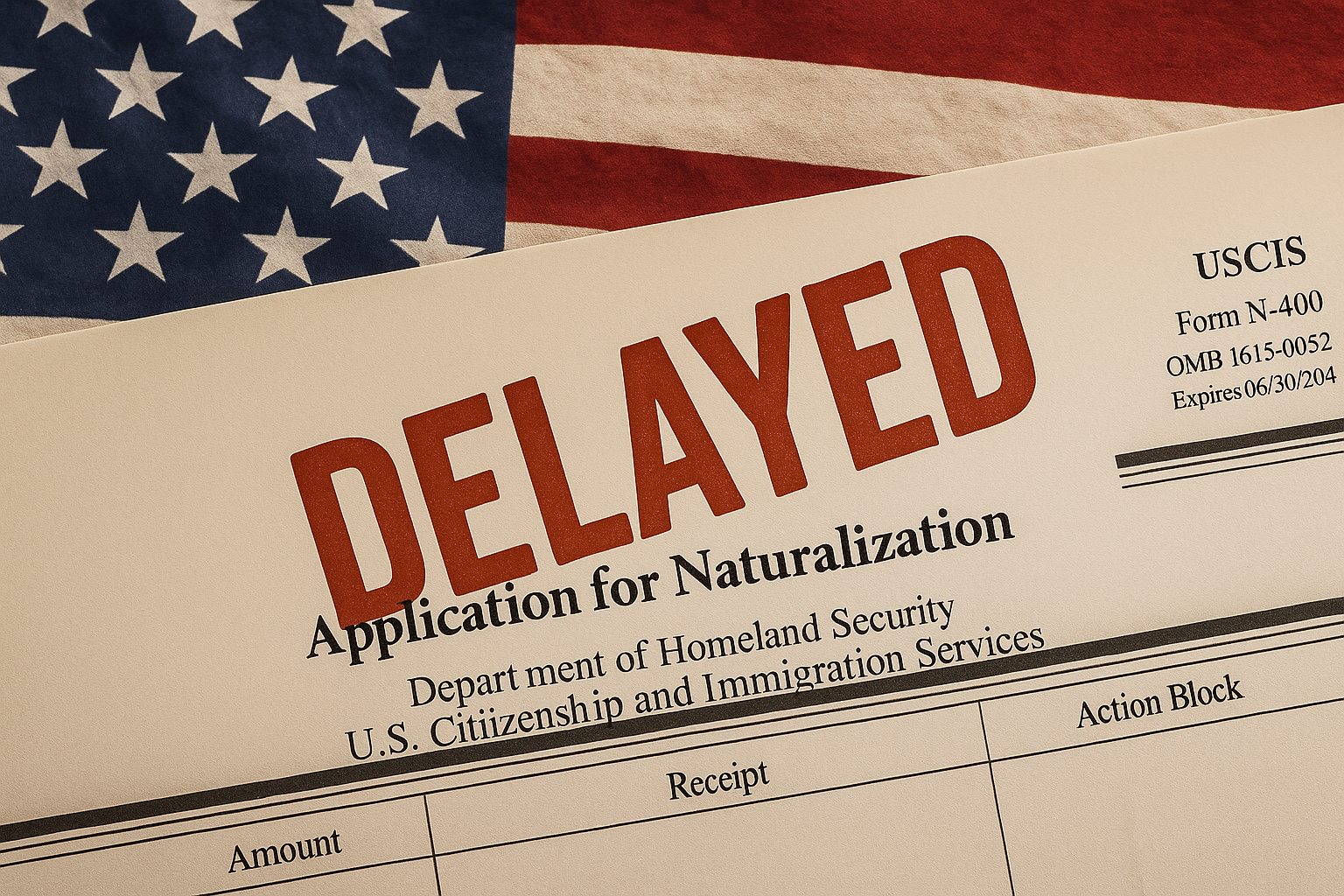
U.S. citizenship is the final goal for many permanent residents who want long-term security, stability, and full rights in the country they call home. Filing Form N-400 feels like the last step of a long journey, but for many, the process becomes slower than expected.
Many applicants believe that once they submit their application and attend biometrics, approval will come quickly. Instead, background checks, field office backlogs, and security reviews can cause unexpected waiting and uncertainty.
Current USCIS data shows that naturalization processing times vary widely by location and workload, and applicants can check the latest timelines directly on the official USCIS processing time tool.
So, understanding the real reasons behind N-400 delays can help applicants avoid stress and take the right steps to move their case forward.
This guide explains what is causing N-400 delays in 2026 and what you can do to protect your path to U.S. citizenship.
What Is Form N-400?
Form N-400 serves as the naturalization application for lawful permanent residents seeking U.S. citizenship under federal immigration law. It is reviewed by USCIS to assess eligibility under requirements such as continuous residence, physical presence, good moral character, and compliance with current background and security screening standards in effect in 2026.
According to USCIS data, about 818,500 individuals took the oath and became U.S. citizens in fiscal year 2024, marking one of the highest naturalisation counts in recent years.
Applicants must provide key documentation such as a green card, birth certificate, marriage certificate, or divorce decree to support their application. Each submission includes a receipt number, which you’ll use to track progress. The process continues with a biometrics appointment, a naturalization interview with a USCIS officer, and, if approved, an oath ceremony. Even minor omissions can lead to a request for additional evidence, so attention to detail is essential.
What Are the Average Processing Times in 2026?
Wait times for the naturalization process in 2026 continue to vary widely. While some applicants move from filing to oath ceremony in just a few months, others report delays with no clear reason. Your location, background, and the workload at your USCIS office all play a role.
As of January 2026, the national median processing time for Form N-400 completion is approximately 8 months, according to USCIS field office processing time reports.
These variations often depend on field office scheduling, case volume, and even the number of USCIS officers available to conduct your naturalization interview. Larger metro areas like Miami, FL or Los Angeles, CA, face heavier caseloads, leading to delays in interviews and notice mail-outs.
Other factors, such as pending background checks, unresolved service requests, or missing proof like a passport, court order, or supporting documents, can also affect your timeline. If your receipt number shows no progress for several months, it’s worth reviewing your case status or speaking with an immigration attorney.
Local Field Office Delays: Why They Matter
The USCIS office that handles your case has a direct impact on how long your naturalization application may take. Although the national average sits around 8 months, individual field offices follow different timelines based on caseload, staffing, and regional demand.
In 2026, some cities will continue to operate well below the national average. Offices in Charleston, SC and Des Moines, IA, move efficiently, sometimes scheduling a naturalization interview within 3 months of the biometrics appointment. By contrast, places like Portland, ME and Miami, FL, face growing backlogs, with wait times reaching nearly a year.
These differences are often tied to population size, volume of filed petitions, and whether the office must allocate resources to security service reviews or humanitarian priorities. Delays may also stem from increased background checks, procedural updates, or unresolved site owner issues related to documentation uploaded through online portals.
If you’ve received no update after your receipt date and your field office is experiencing heavy volume, don’t assume your case has been forgotten. A service request can help bring attention to your file, especially if you’ve already provided evidence like a marriage certificate, divorce decree, or court order to confirm your marital status or prior address history.
What’s Causing Delays in 2026?
Higher Application Volumes
In 2025 and continuing into early 2026, USCIS has seen a sustained increase in Form N-400 filings, placing added pressure on staffing and processing resources. Although approval rates remain strong, the higher volume of applications has slowed interview scheduling and case movement at many field offices, contributing to longer overall processing times.
Agency-Wide Backlogs
By mid‑2025, USCIS backlog reached a record 11.3 million pending applications across all form types, including naturalization, green cards, and other benefits, delaying adjudication and creating a frontlog of unopened cases.
Field Office Resources and Staffing
Some field offices lack sufficient officers or face redeployment to humanitarian or work‑permit cases. This uneven distribution causes regional bottlenecks. Areas with fewer personnel tend to schedule interview notices and manage files more slowly, slowing down decision timelines for naturalization applicants.
Background Check & Security Delays
When your case requires detailed security checks, especially for common names or flagged histories, processing takes longer. FBI name checks and programs like CARRP have long backlogs, and USCIS cannot approve citizenship until these are cleared.
Policy & Form Changes in Early 2026
In late 2025 and continuing into early 2026, USCIS confirmed the continued use of the revised Form N-400 (01/20/2025 edition), including the permanent removal of the “X” gender marker and updated digital filing validations. By 2026, most field offices and online systems had fully synchronized with the correct form version, reducing resubmission errors. However, cases filed during the transition period in 2025 may still experience delayed adjudication due to version mismatches and re-processing backlogs.
Is My Case “Outside Normal” Processing Time?
Delays can make any person applying for citizenship feel anxious, especially when they’ve already taken several actions, like paying the fee, attending the civics tests, and submitting required documents. But not all delays mean your case has a problem.
USCIS posts estimated timeframes by field office. If your A-number shows your case exceeds that window, your application may be considered outside normal processing time. Sometimes, a criminal record, unresolved child support, or even a discrepancy in your responses can lead to a note or request for more information.
In rare cases, a system error like a Cloudflare Ray ID issue or an outdated security solution may disrupt status tracking. Technical terms like “performed triggered SQL command” or “Cloudflare Ray ID found” may appear in system-generated messages, usually due to online attacks or platform instability, not your case.
If you’re unsure whether your application has been delayed for a valid reason, contact an immigration attorney. A careful review can determine whether your case meets the eligibility requirements or has been mistakenly flagged by Homeland Security systems.
What Should You Do If You’re Facing a Delay?
Many applicants feel uncertain when their naturalization application shows no progress. Instead of waiting in the dark, it’s important to take clear steps to understand your case status.
Start by using your receipt number to check the USCIS processing time for your local office. If your case goes beyond the expected range, you may qualify to submit a service request through USCIS’s online tools. This prompts a formal inquiry into your case and helps determine if additional documentation or action is needed.
A delayed case may be caused by something as simple as a missing document or outdated proof, or something more complex, such as unresolved questions about your criminal record or marital status. Rather than assume the cause, speak with a qualified immigration attorney who can review your file, identify red flags, and help you avoid future setbacks.
At The Chidolue Law Firm, we guide clients through every stage of the naturalization process, offering insight when updates stop and clarity when options seem unclear. When time matters, legal support can help protect your progress and push your case in the right direction.
There’s no need to guess what’s next. Real answers start with the right legal partner.
Why Legal Help Makes a Difference
Delays in the naturalization process often leave applicants confused, especially when there’s no clear explanation. While some cases eventually move forward on their own, others remain stalled without notice. Legal support offers the clarity and direction most people can’t find on their own.
An experienced immigration attorney does more than check for missing documents. They analyze the full scope of your case, your history, eligibility requirements, documentation trail, and communication from USCIS. If a delay is caused by an internal issue, missed notice, or overlooked request, a qualified attorney can take swift action on your behalf.
At The Chidolue Law Firm, we help our clients avoid unnecessary stress and prevent small mistakes from turning into bigger problems. Whether your case was triggered by a background check, documentation concern, or unclear status, we know how to navigate the system and advocate for the outcome you deserve.
Citizenship is too important to leave to chance. If your application feels stuck, now is the time to take control with a legal team that knows exactly what to do next.
Don’t Let Delays or Missed Notices Derail Your Citizenship Plans
A stuck application or long silence from USCIS doesn’t have to stop you from becoming a U.S. citizen. Many people in 2026 still have options to move forward, like requesting a case update, answering a USCIS notice, or getting legal help to correct issues in their naturalization application.
But time matters. Waiting too long to act or missing a notice can make your situation harder to fix.
At The Chidolue Law Firm, we don’t just offer advice—we create a real plan for you. Our team reviews your case, explains what’s causing the delay, and shows you exactly what you can do next. If your case is missing evidence, flagged for a criminal record, or needs follow-up from a USCIS officer, we know how to help.
You don’t have to figure this out by yourself. You don’t have to stay stuck.
📞 Call The Chidolue Law Firm today at:
➡ 678-233-2170
➡ 678-325-1037
💬 For WhatsApp inquiries, contact us at:
➡ 404-333-8751
Let us help you take the next step with confidence and get your citizenship process back on track.